Etruscan Furnace Slag
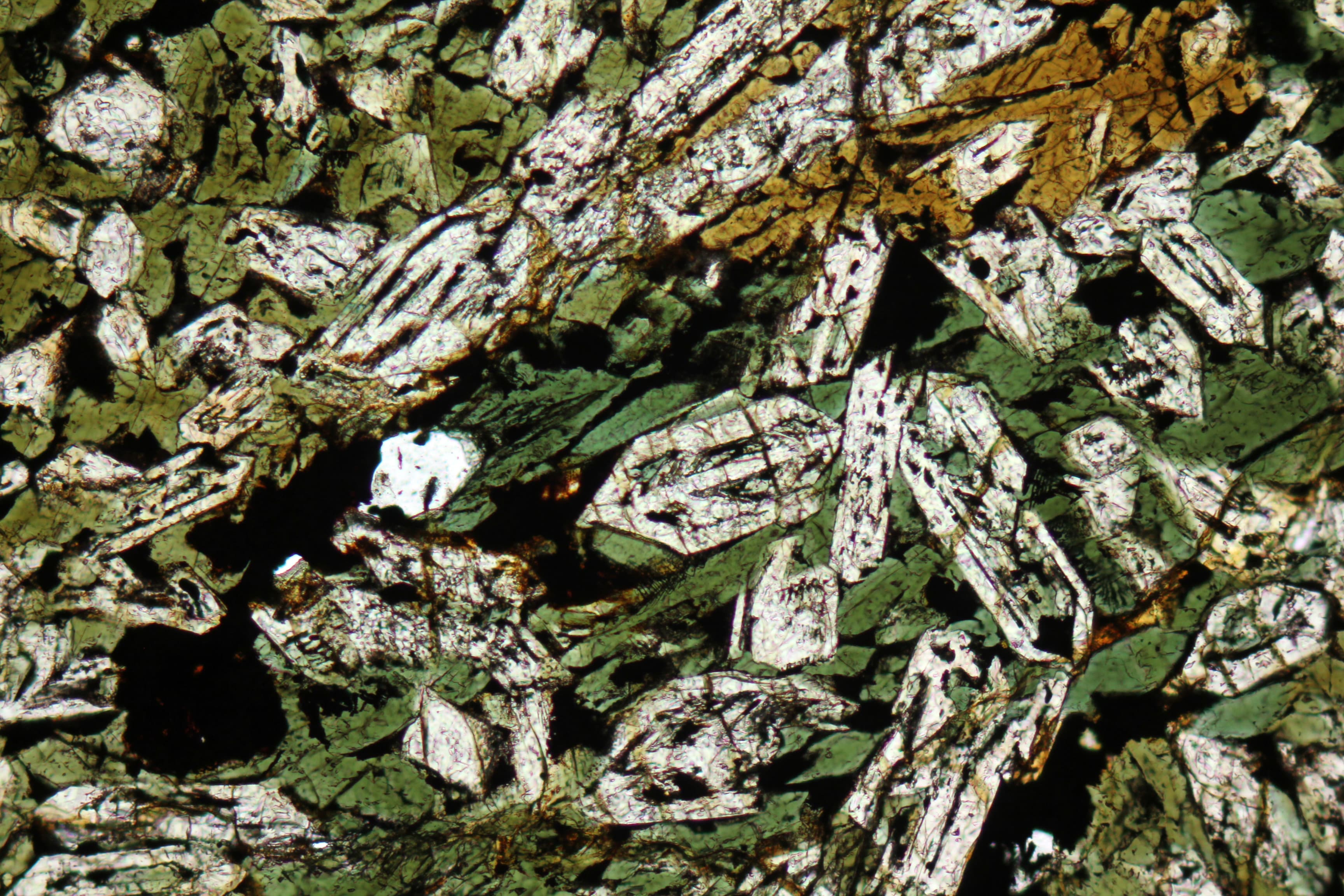
Image: Strekeisen (CC BY-SA 4.0)
Mineral NameEtruscan Furnace Slag
Chemical FormulaComplex mixture of silicates, oxides, and sulfides, primarily composed of iron, calcium, magnesium, and aluminum.
Mohs Hardness5
Streak Colorvariable, often light gray to brownish
CleavagePyroxene exhibits two distinct cleavages at nearly 90 degrees; Olivine has poor cleavage. Slag matrix is typically massive.
Fractureconchoidal to uneven
Specific Gravity2.5
Colorsgreen, colorless, white, brownish, black
Transparencytransparent to translucent
Type LocalityCampiglia Marittima (Livorno), Italy
Mineral GroupIndustrial byproduct (primarily silicate-rich)
Usesarchaeological study, metallurgical research, historical artifact
Associated Mineralspyroxene, olivine
Rarityuncommon
Description
This microscopic image displays skeletal crystals of green pyroxene and colorless olivine embedded within an Etruscan furnace slag matrix. The crystals show distinct forms and varying optical properties under plane polarized light.
Geological Context
This material is an anthropogenic byproduct, formed during the high-temperature smelting of metals by the Etruscans. Its microstructure provides insights into ancient metallurgical processes and furnace conditions.