Dog Rock (Granite)
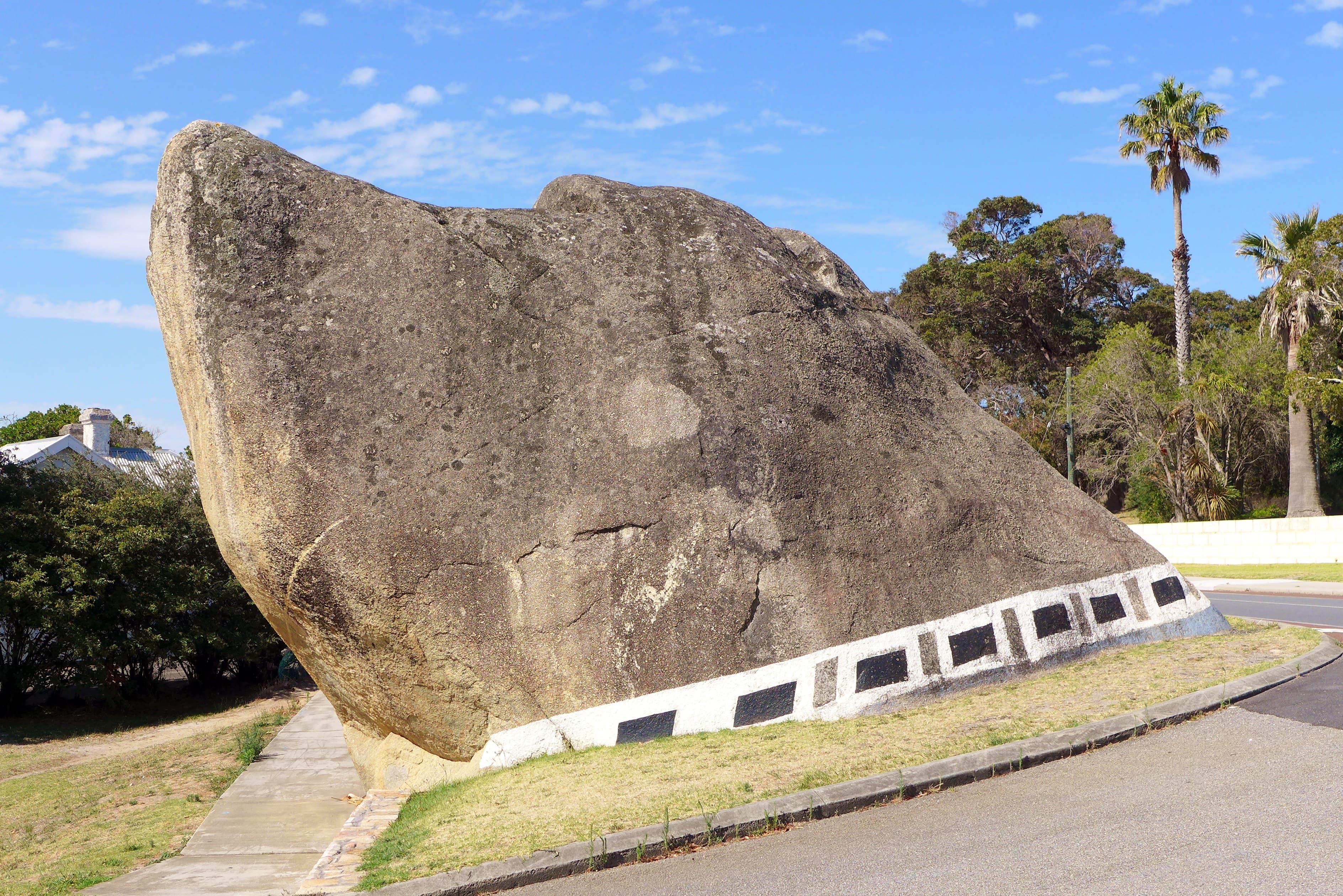
Image: Bahnfrend (CC BY-SA 4.0)
Mineral NameDog Rock (Granite)
Chemical FormulaPrimarily SiO2 (quartz), KAlSi3O8 (orthoclase), NaAlSi3O8 (albite), CaAl2Si2O8 (anorthite), with minor Fe, Mg, Al silicates.
Mohs Hardness6
Streak Colorwhite to colorless
CleavagePresent in constituent minerals (e.g., feldspar, mica), but not a characteristic of the bulk rock.
Fractureuneven to conchoidal
Specific Gravity2.65
Colorsgrey, brown, pinkish-grey
Transparencyopaque
Type LocalityAlbany, Western Australia
Mineral GroupIgneous Rock (Felsic Intrusive)
Usesnatural landmark, building material, monuments
Associated Mineralsquartz, feldspar, biotite, muscovite, amphibole
Raritycommon
Description
A large, weathered, greyish-brown granite outcrop, naturally shaped to resemble a dog's head, with a painted white and black pattern along its base.
Geological Context
Dog Rock is a granite inselberg, an erosional remnant of a large, ancient granite batholith that formed deep within the Earth's crust from cooling magma. It has been exposed over millions of years through uplift and weathering.