Diorite
Image: Vassil (Public domain)
Mineral NameDiorite
Chemical FormulaComplex silicate (composed primarily of plagioclase feldspar, hornblende, and biotite)
Mohs Hardness6
Streak ColorWhite to gray (for feldspar), dark for mafic minerals
CleavageGood in constituent minerals (e.g., two directions at ~90° in feldspar, two directions at ~56° and ~124° in hornblende)
FractureUneven to conchoidal
Specific Gravity2.85
Colorsblack, white, dark gray
TransparencyOpaque
Type LocalityWorldwide, often found in continental arcs and orogenic belts (e.g., Andes, Sierra Nevada, various European localities)
Mineral GroupIgneous Rock (intrusive, intermediate)
Usesdimension stone, construction material, decorative stone, collector's item (orbicular variety)
Associated Mineralsplagioclase feldspar, hornblende, biotite, pyroxene, quartz (minor)
Description
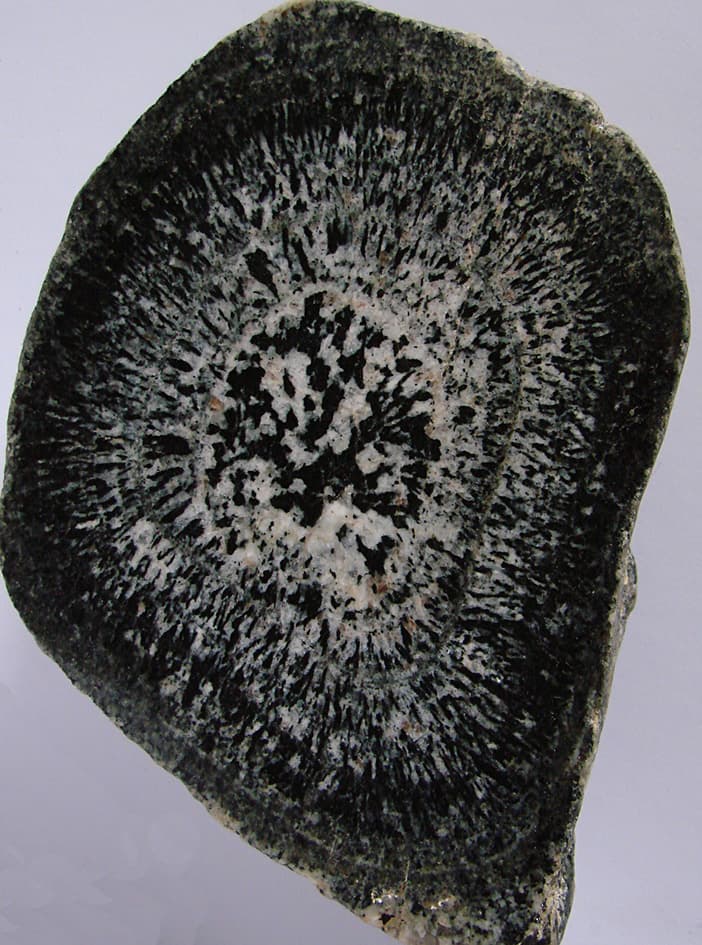
This sample displays a striking orbicular texture, characterized by concentric layers of dark and light minerals radiating outwards from a central core. The rock is predominantly black and white, with the white minerals forming radial patterns within the darker matrix.
Geological Context
Diorite is an intrusive igneous rock formed from the slow cooling and crystallization of intermediate magma deep within the Earth's crust. Orbicular diorite, like this sample, is a rare variety that forms under specific conditions, possibly involving rhythmic crystallization or magma mixing, creating its distinctive spherical structures.