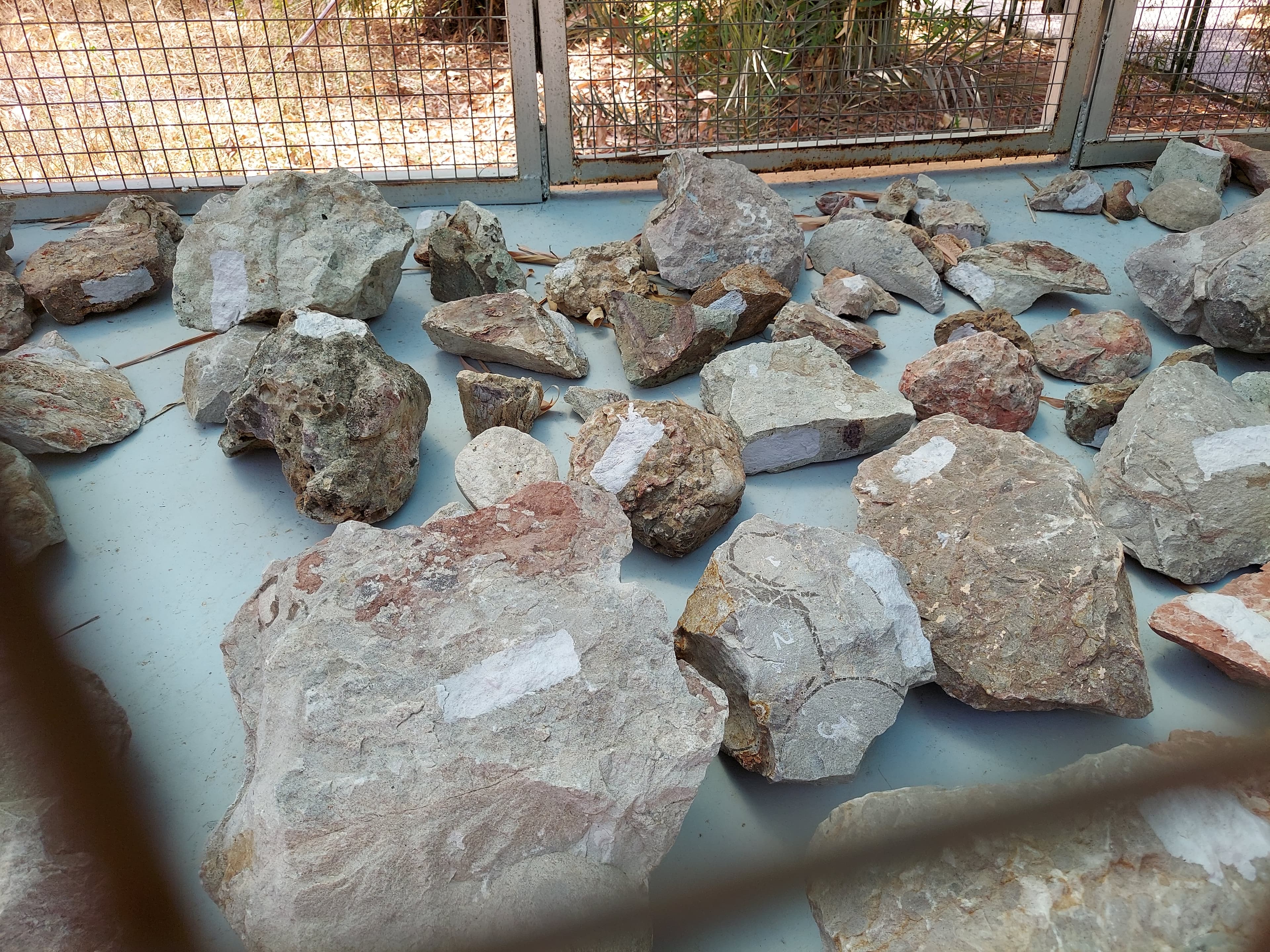
Dinosaur Egg Fossil
Image: Harshit khunt18 (CC BY-SA 4.0)
Mineral NameDinosaur Egg Fossil
Chemical FormulaCaCO3 (primary component of original eggshell, often replaced or cemented by SiO2 or other minerals during fossilization)
Mohs Hardness3
Streak ColorWhite to light brown/grey
CleavagePoor to absent in fossilized form; original calcite exhibits perfect rhombohedral cleavage
FractureUneven to conchoidal
Specific Gravity2.7
Colorslight grey, beige, reddish-brown, off-white
TransparencyOpaque
Type LocalityRaiyoli, Balasinor, Gujarat, India
Mineral GroupFossil (biogenic calcium carbonate, often silicified or embedded in sedimentary rock)
Usesscientific study, education, museum display, collector's items
Associated Mineralscalcite, quartz, clay minerals, iron oxides
Description
The image displays numerous irregular, rounded to sub-angular rock fragments, primarily light grey, beige, and reddish-brown, some with white markings, representing fossilized dinosaur eggs or egg fragments within a sedimentary matrix.
Geological Context
Dinosaur egg fossils form when eggs are buried rapidly in sediment, preventing decay, and their organic material is gradually replaced by minerals like calcium carbonate or silica over millions of years, preserving their structure within sedimentary rock layers. The Raiyoli site is a significant dinosaur hatchery from the Late Cretaceous period.


