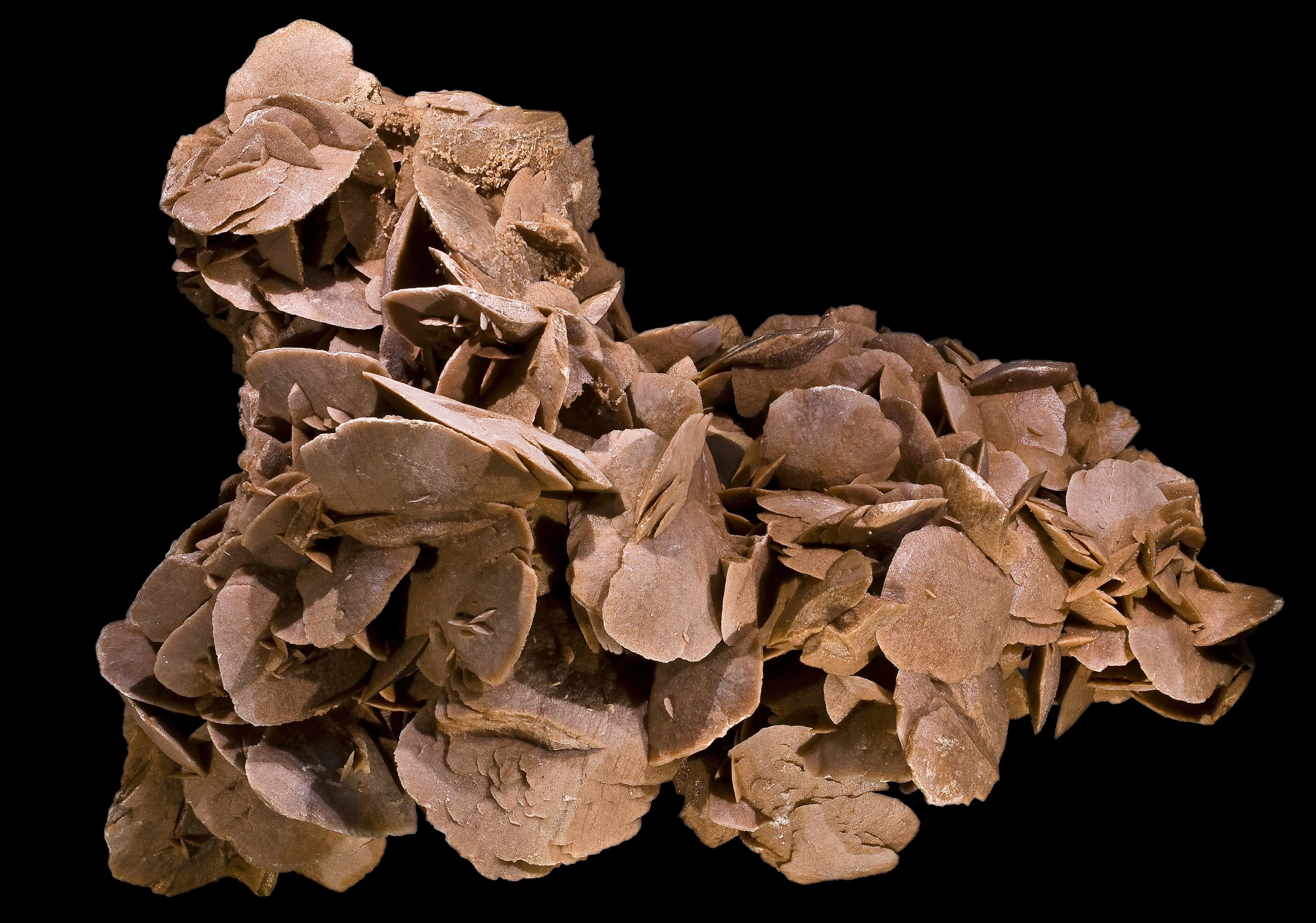
Desert Rose (Gypsum)
Image: Didier Descouens (CC BY-SA 4.0)
Mineral NameDesert Rose (Gypsum)
Chemical FormulaCaSO₄·2H₂O
Mohs Hardness2
Crystal Systemmonoclinic
Lusterdull
Streak Colorwhite
Cleavageperfect on {010}, distinct on {100} and {111}
Fractureconchoidal to uneven
Specific Gravity2.32
Colorsbrown, tan, sandy
Transparencytranslucent
Type LocalitySouthern Tunisia
Mineral GroupSulfates
Usescollector, decorative
Associated Mineralsquartz (sand), clay minerals, halite
Raritycommon
Description
This specimen displays a large cluster of gypsum crystals forming a 'desert rose' habit, characterized by radiating, platy crystals that resemble a rose bloom. The crystals are a sandy brown color due to incorporated sand grains, giving the aggregate a rough, earthy texture.
Geological Context
Desert roses form in arid, sandy regions where groundwater rich in dissolved gypsum evaporates near the surface. The gypsum crystallizes, incorporating sand grains into its structure, creating these distinctive rosette-like formations in evaporitic sedimentary environments.


