Bismuth (synthetic crystal)
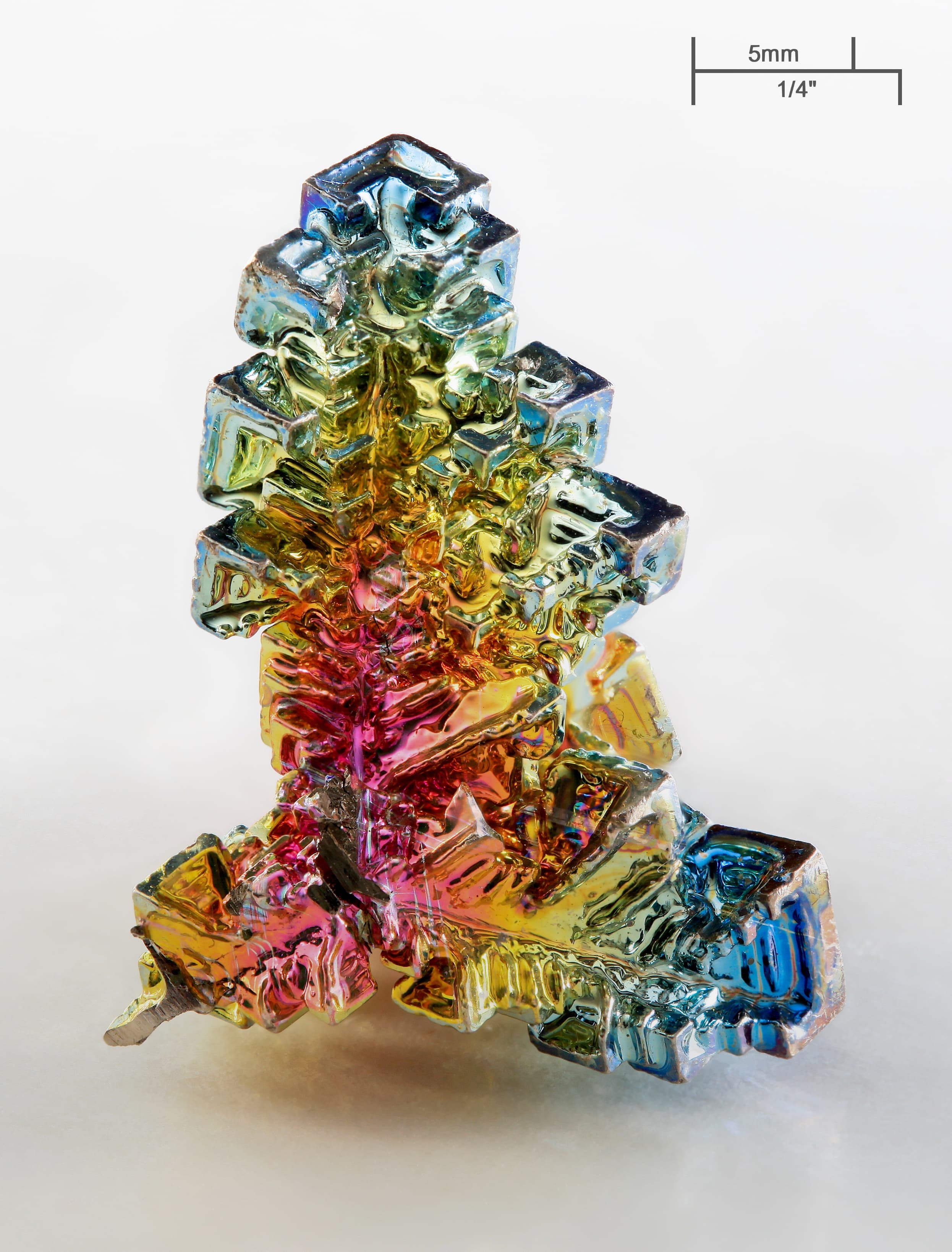
Image: Alchemist-hp (www.pse-mendelejew.de) + Richard Bartz with focus stack. (CC BY-SA 3.0)
Mineral NameBismuth (synthetic crystal)
Chemical FormulaBi
Mohs Hardness2.25
Crystal Systemtrigonal
Lustermetallic
Streak Colorsilvery-white to gray
Cleavageperfect on {0001}
Fractureuneven to subconchoidal
Specific Gravity9.78
Colorsiridescent (blue, green, yellow, orange, pink, purple), silvery-white (underlying metal)
Transparencyopaque
Type LocalitySynthetic
Mineral GroupNative Elements
Usescollector, alloys, pharmaceuticals, cosmetics, thermoelectric materials
Associated MineralsNone (synthetic)
Description
This image shows a synthetic bismuth crystal, characterized by its distinctive hopper growth habit and a vibrant iridescent surface displaying a spectrum of colors, including blues, greens, yellows, and pinks, caused by a thin layer of oxidation. The crystal structure forms a stepped, geometric pattern.
Geological Context
This particular specimen is a synthetic crystal, grown in a laboratory by slowly cooling molten bismuth, which promotes the formation of its unique hopper crystal structure. Naturally occurring bismuth is found in hydrothermal veins and pegmatites, but these synthetic forms are prized for their aesthetic qualities.