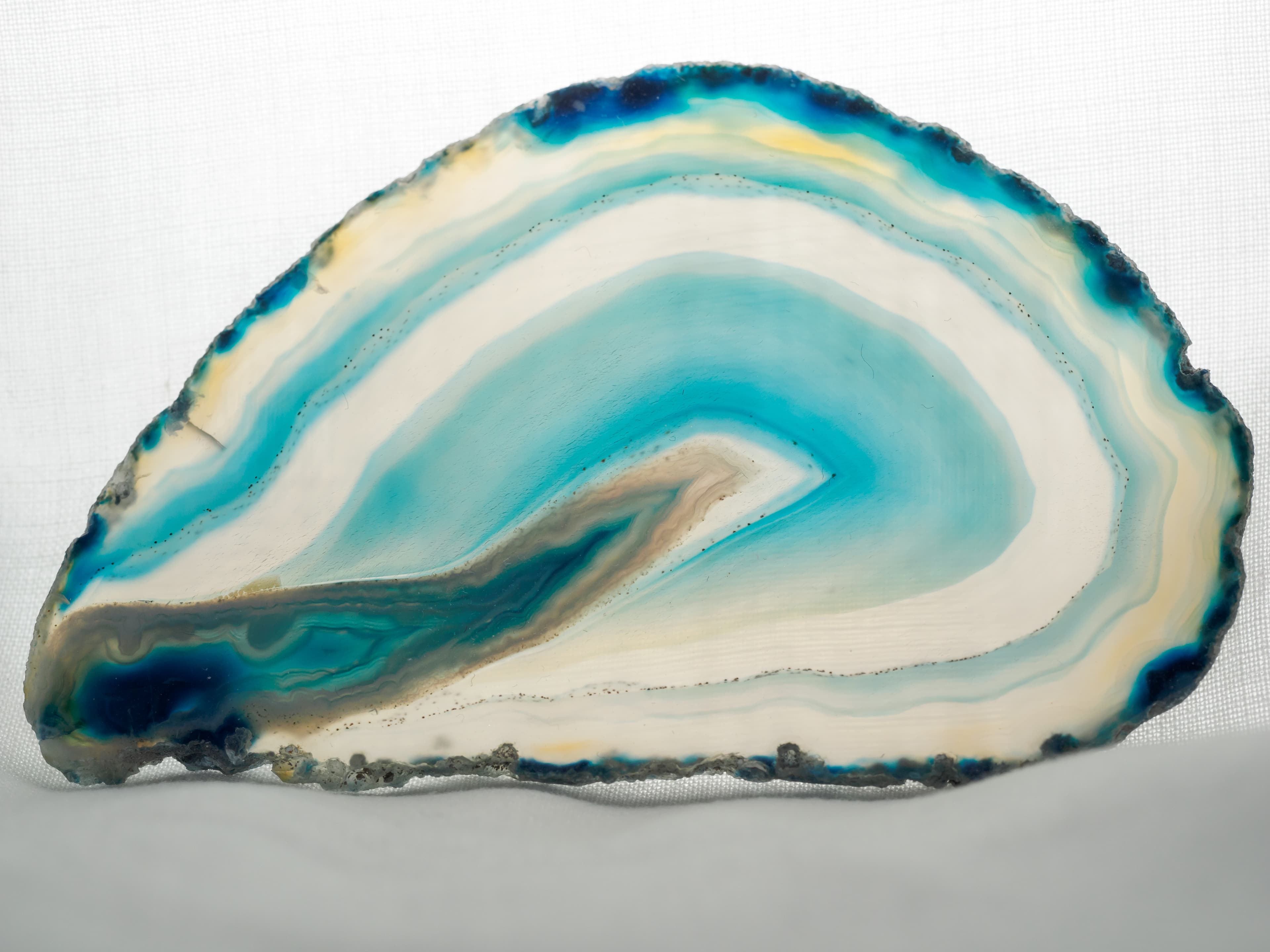
Agate (dyed)
Image: James Petts from London, England (CC BY-SA 2.0)
Mineral NameAgate (dyed)
Chemical FormulaSiO2
Mohs Hardness6.5
Crystal Systemtrigonal
Streak Colorwhite
Cleavagenone
Fractureconchoidal
Specific Gravity2.58
Colorswhite, light blue, dark blue, yellowish-brown
Transparencytranslucent
Type LocalityWorldwide
Mineral GroupSilicates
Usesjewelry, ornamental objects, collector's items
Associated Mineralsquartz, calcite, zeolites
Raritycommon
Description
A thin, polished slice of agate, displaying concentric bands of white, light blue, dark blue, and yellowish-brown, characteristic of dyed specimens.
Geological Context
Agate forms in cavities within volcanic rocks or ancient lavas, where silica-rich fluids deposit successive layers of microcrystalline quartz, often filling amygdules or geodes.


