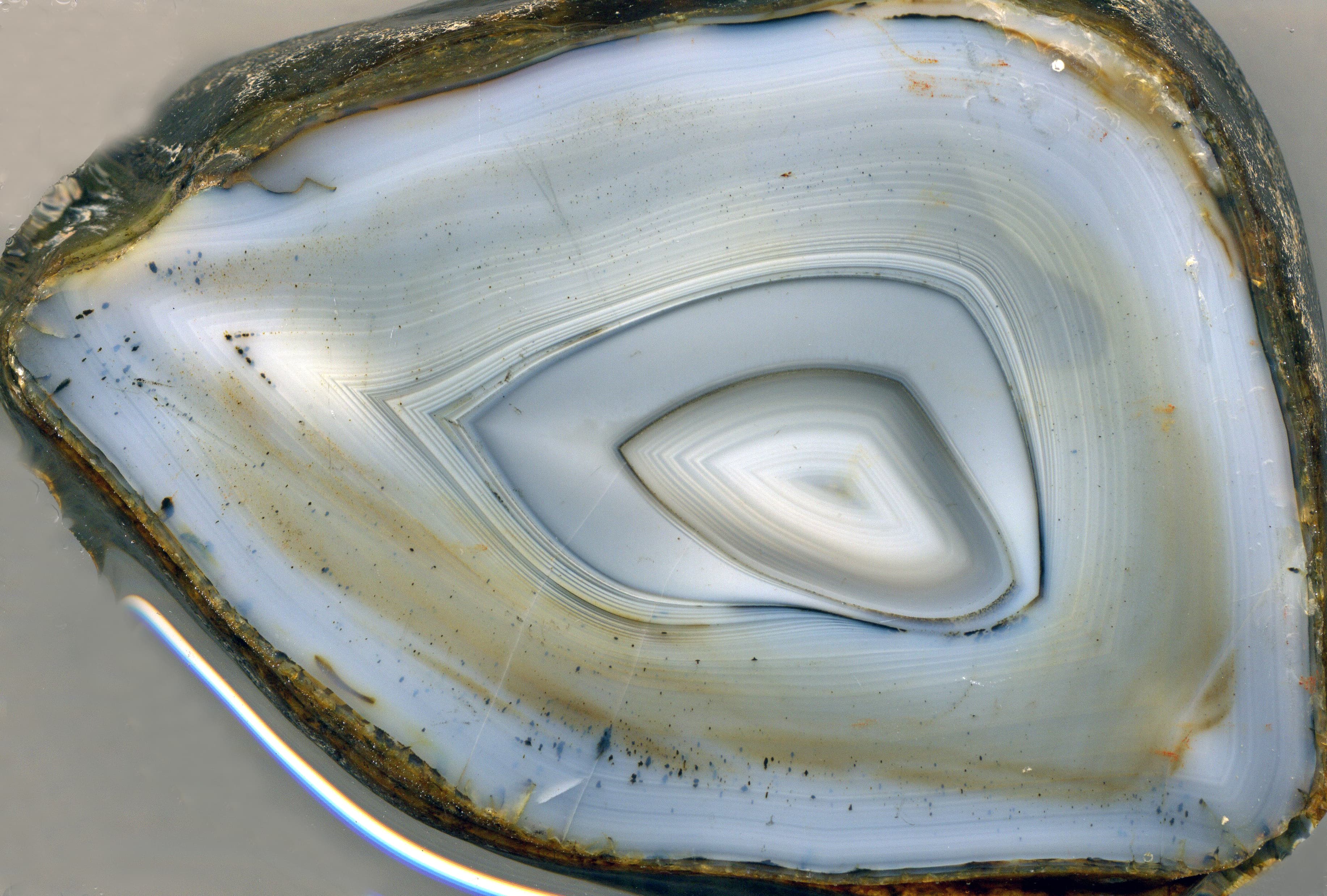
Agate
Image: James St. John (CC BY 2.0)
Mineral NameAgate
Chemical FormulaSiO2
Mohs Hardness7
Crystal Systemtrigonal
Lusterwaxy
Streak Colorwhite
Cleavagenone
Fractureconchoidal
Specific Gravity2.65
Colorswhite, light blue-grey, brownish-grey
Transparencytranslucent
Mineral GroupSilicates
Usesjewelry, ornamental, collector
Associated Mineralsquartz, chalcedony
Raritycommon
Description
This image shows a polished slice of agate, revealing distinct concentric bands of light blue-grey, white, and brownish-grey, enclosed within a darker, rougher outer rind.
Geological Context
Agate forms in cavities within rocks, typically sedimentary rocks like limestone or igneous rocks such as basalt. These cavities are filled over time by irregularly concentric layers of microcrystalline, fibrous quartz (chalcedony).


