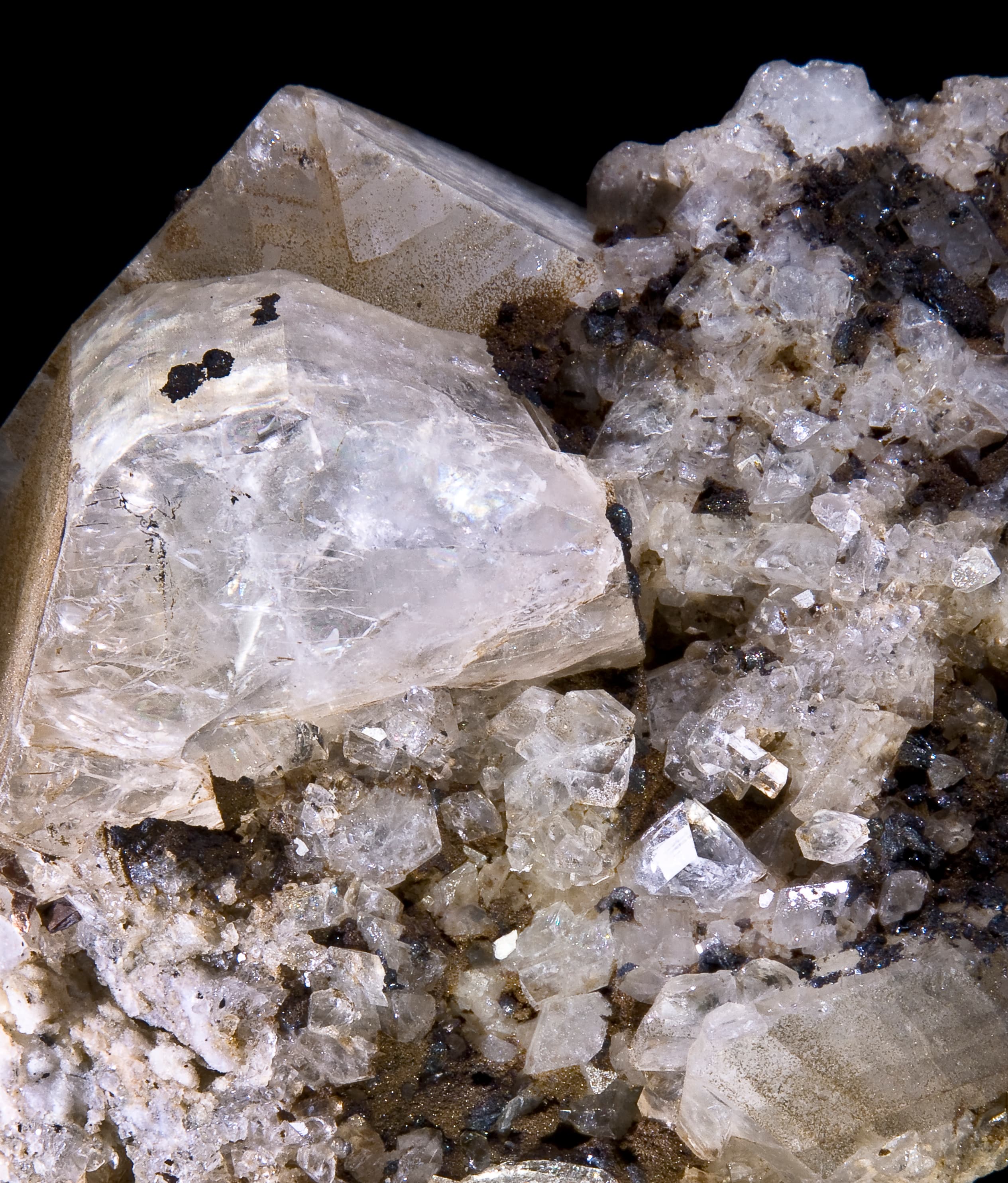
Adularia
Image: Didier Descouens (CC BY-SA 3.0)
Mineral NameAdularia
Chemical FormulaKAlSi3O8
Mohs Hardness6
Crystal Systemmonoclinic
Lustervitreous
Streak Colorwhite
Cleavageperfect on {001} and {010}, nearly at 90 degrees
Fractureuneven
Specific Gravity2.56
Colorscolorless, white, pale yellow
Transparencytransparent
Type LocalityAdula Mts, Ticino (Tessin), Switzerland
Mineral GroupSilicates
Usescollector, gemstone (moonstone variety)
Associated Mineralsquartz, chlorite, epidote, albite, calcite
Rarityuncommon
Description
This specimen features large, well-formed, translucent to transparent adularia crystals, exhibiting a vitreous luster and some internal iridescence, growing on a matrix of smaller crystals and dark mineral inclusions.
Geological Context
Adularia is a low-temperature variety of orthoclase feldspar, typically forming in hydrothermal veins and alpine clefts within metamorphic rocks, often associated with quartz and other alpine-type minerals.


