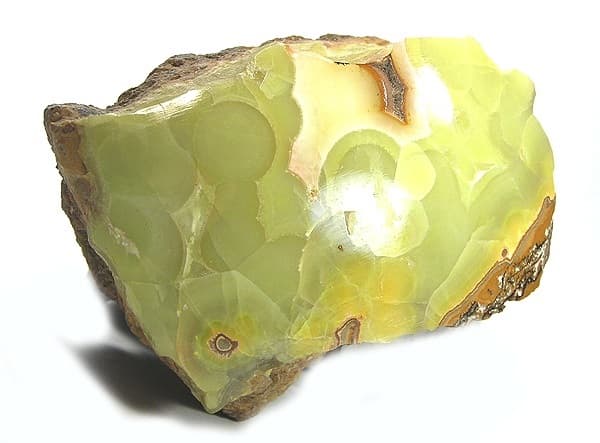
Smithsonite
Image: Robert M. Lavinsky (CC BY-SA 3.0)
Mineral NameSmithsonite
Chemical FormulaZnCO₃
Mohs Hardness4.5
Crystal Systemtrigonal
Lustervitreous
Streak Colorwhite
Cleavageperfect rhombohedral on {1011}
Fractureuneven
Specific Gravity4.4
Colorslight green, yellowish-green, white, brown
Transparencytranslucent
Type LocalityMasua Mine, Masua, Iglesias, Carbonia-Iglesias Province, Sardinia, Italy
Mineral GroupCarbonates
Usesore of zinc, collector's mineral, jewelry
Associated Mineralshemimorphite, cerussite, anglesite, galena, sphalerite, calcite, limonite
Rarityuncommon
Description
This specimen features botryoidal (grape-like) aggregates of translucent, light yellowish-green smithsonite, with some areas exhibiting opaque white or yellow coloration and minor brown matrix. The surface displays a waxy to vitreous luster.
Geological Context
Smithsonite is a secondary mineral that forms in the oxidized zone of zinc-bearing ore deposits, typically found in limestones or dolomites where zinc-rich solutions react with carbonate rocks. It often occurs as botryoidal, stalactitic, or massive habits.


