Slate
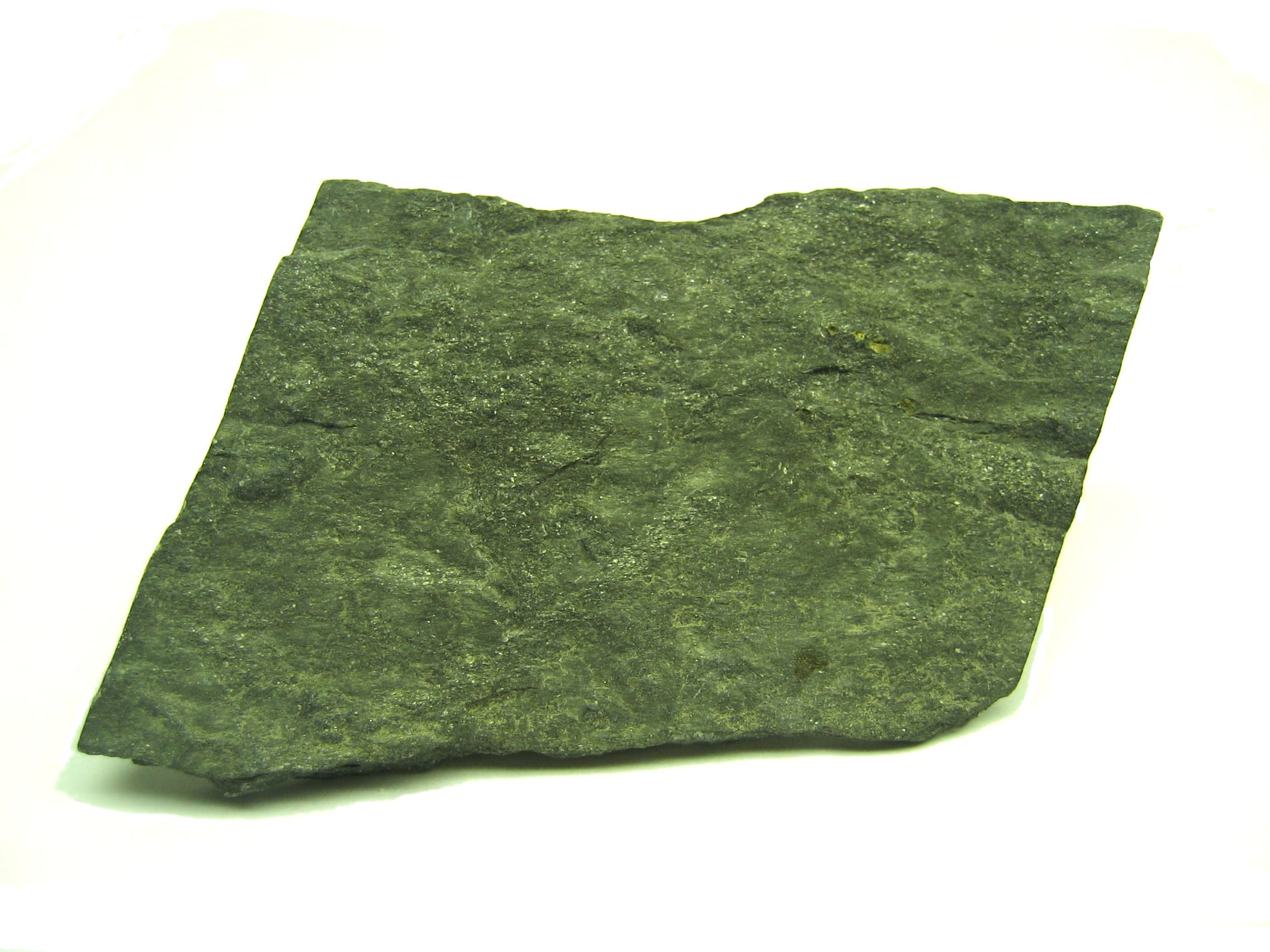
Image: “Jon Zander (Digon3)” (CC BY-SA 3.0)
Mineral NameSlate
Chemical FormulaComplex silicate (composed primarily of quartz, muscovite, illite, chlorite)
Mohs Hardness2.5
Streak ColorGray to black, sometimes greenish-gray
CleavagePerfect slaty cleavage (splits into thin, flat sheets)
FractureUneven to splintery
Specific Gravity2.7
Colorsdark green, gray, black, red, purple
TransparencyOpaque
Type LocalityWorldwide (e.g., Wales, Vermont, Brazil)
Mineral GroupMetamorphic rock
Usesroofing, flooring, chalkboards, decorative stone, writing tablets
Associated Mineralsquartz, muscovite, illite, chlorite, biotite, pyrite, hematite
Raritycommon
Description
A dark greenish-gray, fine-grained metamorphic rock with a distinct planar fabric, appearing as a flat, rectangular piece. Its surface is somewhat rough and dull, showing evidence of its characteristic slaty cleavage.
Geological Context
Slate forms from the low-grade regional metamorphism of shale or mudstone, typically in convergent plate boundaries. The intense pressure causes the clay minerals to recrystallize into micas and chlorite, aligning perpendicular to the stress, creating its characteristic slaty cleavage.