Seymchan meteorite (Pallasite)
Image: Raimond Spekking (CC BY-SA 4.0)
Mineral NameSeymchan meteorite (Pallasite)
Chemical Formula(Mg,Fe)2SiO4 (olivine) + Fe-Ni alloy (nickel-iron)
Mohs Hardness4-7 (olivine 6.5-7, nickel-iron 4-5)
Streak ColorWhite (olivine), Grey (nickel-iron)
CleavagePoor (olivine), None (nickel-iron)
FractureConchoidal (olivine), Hackly (nickel-iron)
Specific Gravity4.5-5.5 (overall for pallasites)
Colorsyellow, orange, green, brown, silvery-grey
TransparencyTransparent to translucent (olivine), Opaque (nickel-iron)
Type LocalitySeymchan, Russia
Mineral GroupStony-iron meteorite (Pallasite class)
Usesscientific study, collector specimens, jewelry
Associated Mineralsolivine, kamacite, taenite, troilite, schreibersite
Rarityrare
Description
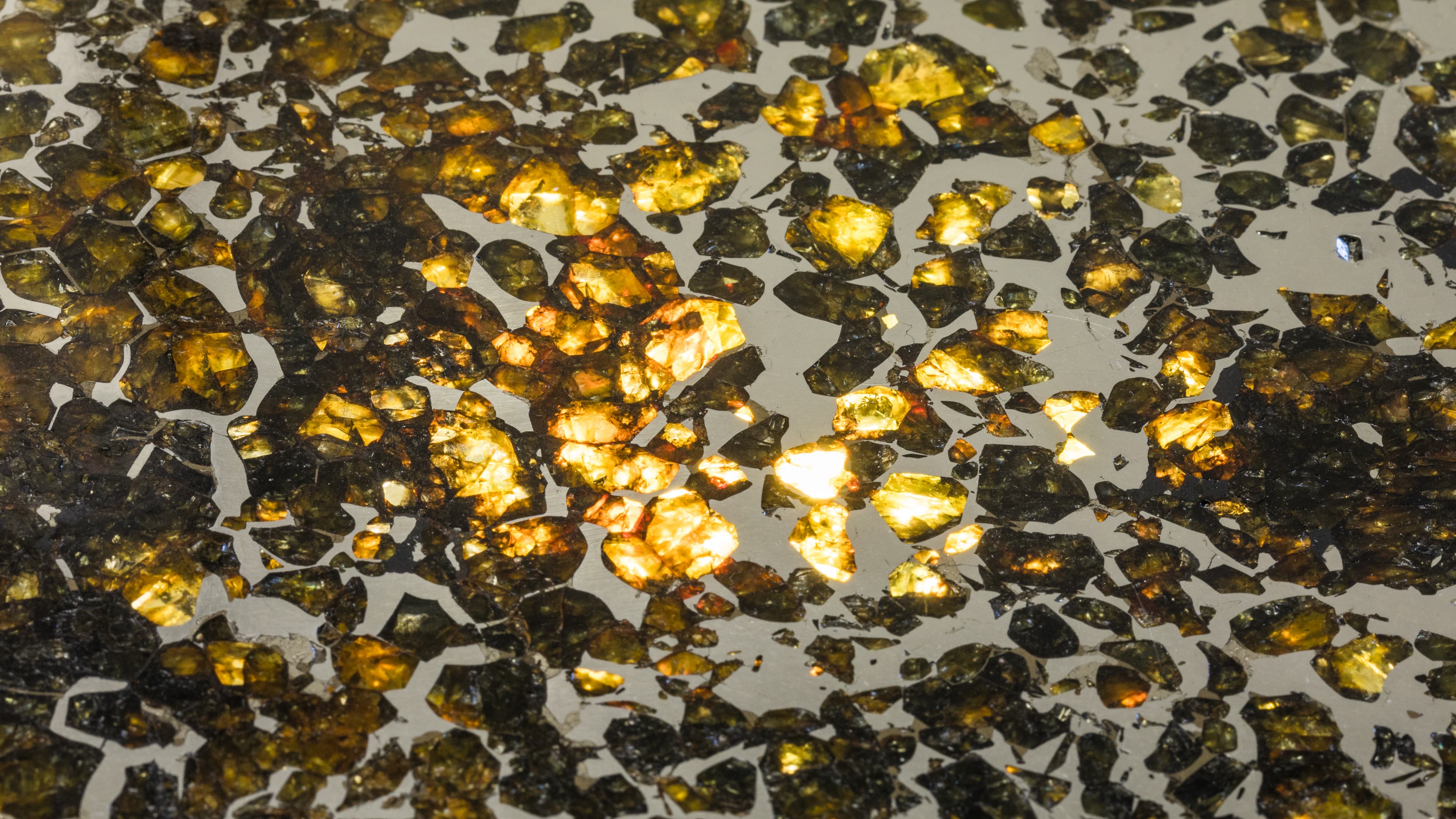
This image displays a polished slice of the Seymchan pallasite, featuring numerous angular to rounded translucent crystals of olivine, ranging in color from bright yellow-orange to dark olive-green, embedded within a silvery-grey metallic nickel-iron matrix. The olivine crystals are illuminated from behind, highlighting their internal clarity and vibrant colors.
Geological Context
Pallasites are a rare type of stony-iron meteorite believed to originate from the core-mantle boundary of differentiated asteroids. They represent material from the early solar system, formed through processes of planetary differentiation and subsequent impact events.