Serpentinite
Image: Марися Лебідь (CC BY-SA 4.0)
Mineral NameSerpentinite
Chemical Formula(Mg,Fe)3Si2O5(OH)4
Mohs Hardness2.5
Crystal Systemmonoclinic
Streak ColorWhite
CleavageNone to poor
Fractureconchoidal
Specific Gravity2.55
Colorsgreen, yellow, brown, black, reddish-brown, grey
Transparencytranslucent
Type LocalityWorldwide
Mineral GroupSilicates
Usesornamental stone, carvings, architectural stone, jewelry, sculpture
Associated Mineralsmagnetite, chromite, talc, magnesite, olivine, pyroxene, calcite
Raritycommon
Description
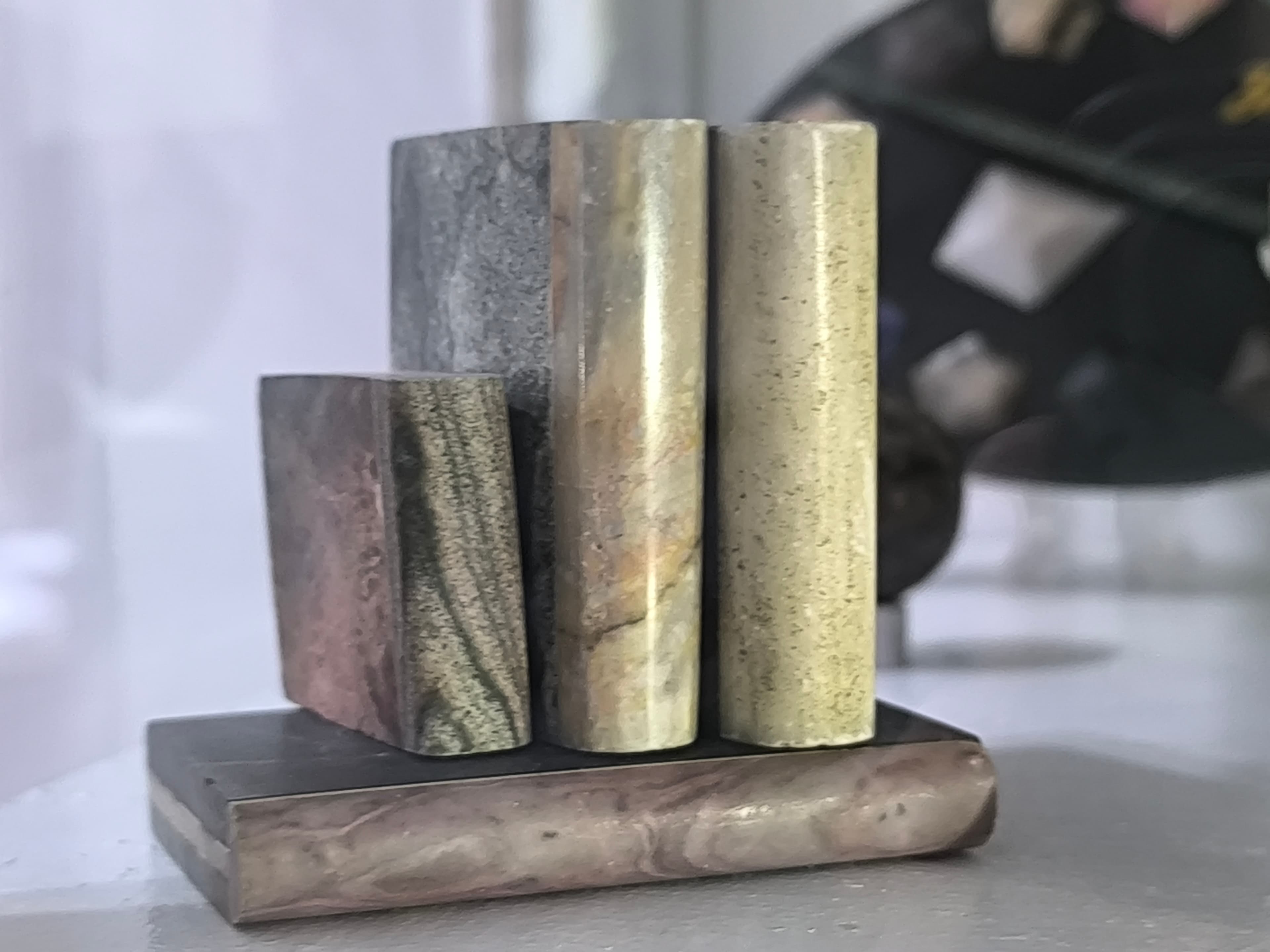
A collection of polished ornamental stone pieces, likely serpentinite, displaying a range of colors including various shades of green, yellow, brown, reddish-brown, and dark grey, with some pieces exhibiting distinct banding and mottling.
Geological Context
Serpentinite is a metamorphic rock formed by the hydration and metamorphic transformation of ultramafic rocks (like peridotite and dunite) from the Earth's mantle. This process, called serpentinization, occurs at relatively low temperatures and pressures.