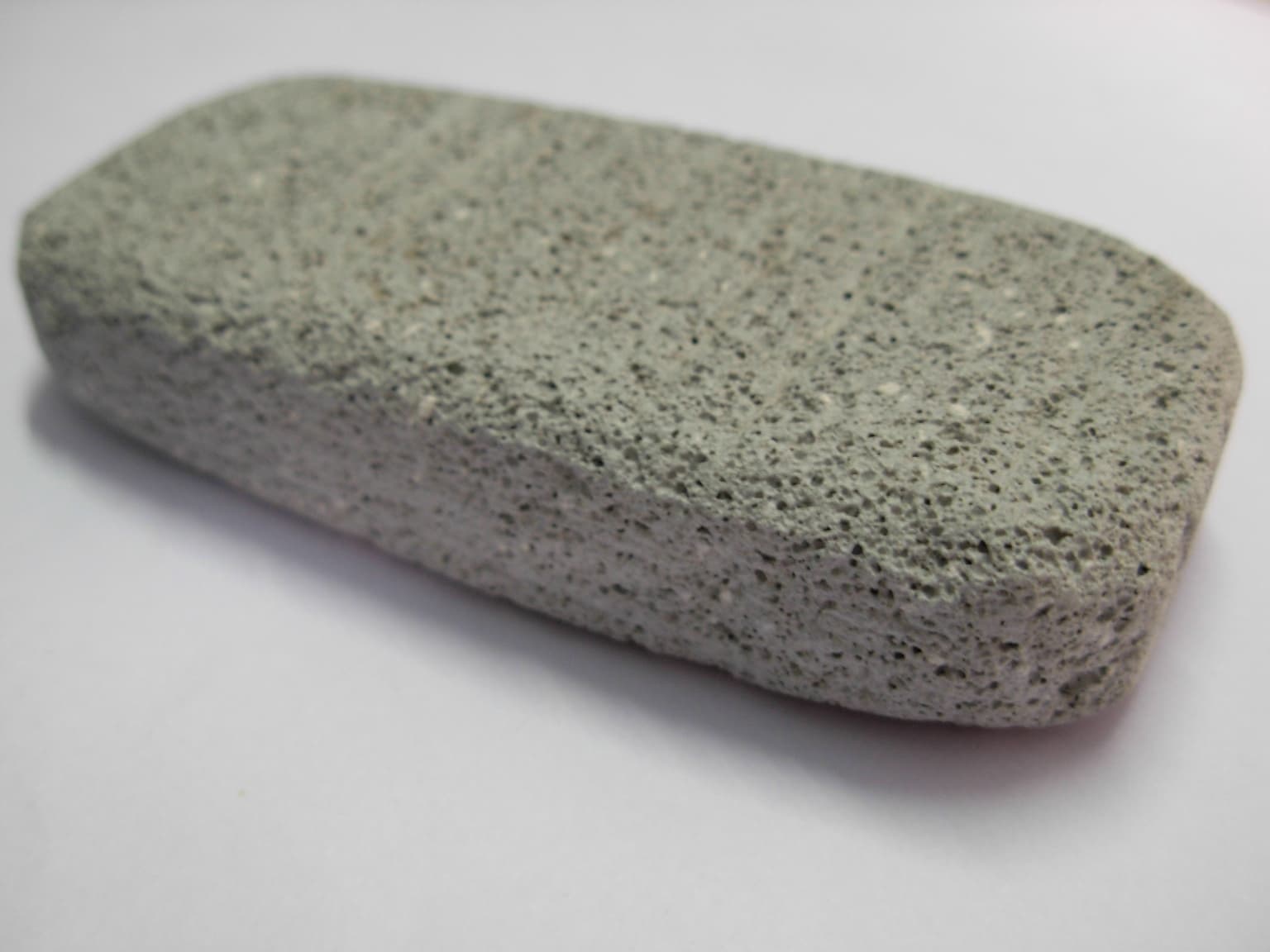
Pumice
Image: Ambuj Saxena (CC BY 2.0)
Mineral NamePumice
Chemical Formula(Na,K,Ca)AlSi3O8 (primarily silicic volcanic glass)
Mohs Hardness5
Crystal Systemamorphous
Lusterdull
Streak Colorwhite
Cleavagenone
Fractureconchoidal
Specific Gravity0.64
Colorslight grey, white, yellowish, brownish
Transparencyopaque
Type LocalityVolcanic regions worldwide (e.g., Italy, USA, Greece, Indonesia)
Mineral GroupVolcanic rock (igneous extrusive)
Usesabrasives, lightweight aggregate, horticulture, personal care, insulation
Associated Mineralsfeldspar, quartz, biotite, hornblende
Raritycommon
Description
The image shows a rectangular block of light grey pumice, characterized by its highly vesicular (porous) texture, giving it a sponge-like appearance.
Geological Context
Pumice is a highly vesicular volcanic glass formed during explosive volcanic eruptions when superheated, highly pressurized molten rock is rapidly ejected from a volcano. The rapid depressurization causes gases to exsolve, forming countless bubbles that are frozen into the glass matrix as it cools quickly.


