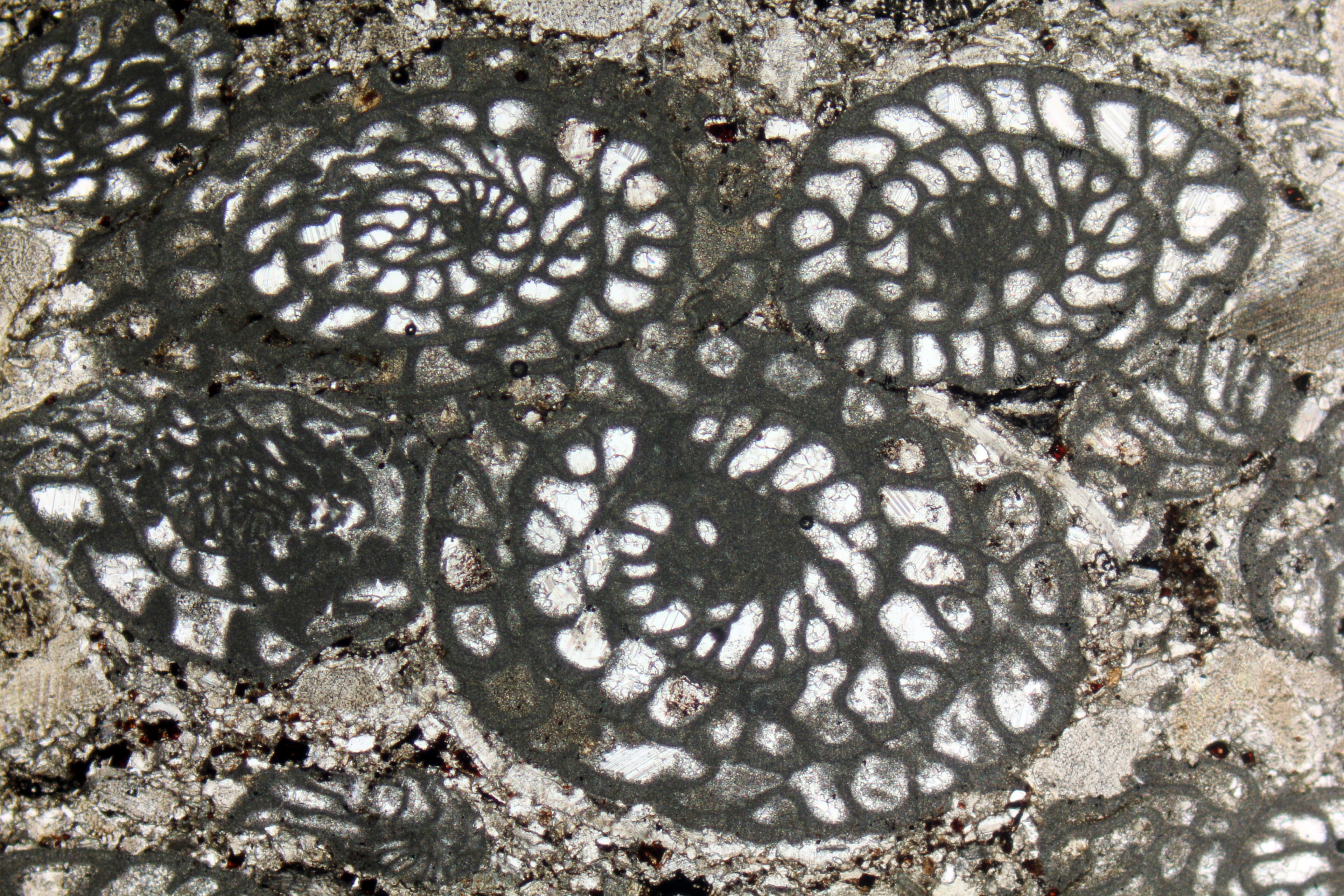
Limestone
Image: Strekeisen (CC BY-SA 4.0)
Mineral NameLimestone
Chemical FormulaCaCO3 (primarily calcite)
Mohs Hardness3
Streak ColorWhite
CleavagePerfect rhombohedral in three directions (for calcite)
FractureConchoidal to uneven
Specific Gravity2.71
Colorswhite, gray, tan, brown, black
TransparencyOpaque to translucent
Type LocalityWorldwide
Mineral GroupCarbonate rock
Usesbuilding material, cement production, aggregate, agricultural lime, dimension stone, paleontological study
Associated Mineralscalcite, aragonite, dolomite, quartz, clay minerals, chert, pyrite, feldspar, fossils (e.g., Fusulinida, brachiopods)
Raritycommon
Description
A microscopic image of a limestone thin section, displaying multiple rounded, dark fusulinid fossils with distinct internal spiral chambers, set within a lighter, granular matrix. Elongate brachiopod fragments are also discernible.
Geological Context
Limestone is a common sedimentary rock formed in marine environments from the accumulation of calcium carbonate shells and skeletal remains of organisms like foraminifera (e.g., fusulinids) and brachiopods. It provides crucial insights into ancient marine ecosystems and paleoclimates.


