Gypsum
Image: Didier Descouens (CC BY-SA 4.0)
Mineral NameGypsum
Chemical FormulaCaSO₄·2H₂O
Mohs Hardness2
Crystal Systemmonoclinic
Lustervitreous
Streak Colorwhite
Cleavageperfect on {010}, good on {100} and {111}
Fractureconchoidal
Specific Gravity2.32
Colorswhite, colorless
Transparencytranslucent
Type LocalityNaica, Mun. de Saucillo, Chihuahua, Mexico
Mineral GroupSulfates
Usesplaster, drywall, fertilizer, sculpture, collector
Associated Mineralscalcite, anhydrite, galena, sphalerite, fluorite
Raritylegendary
Description
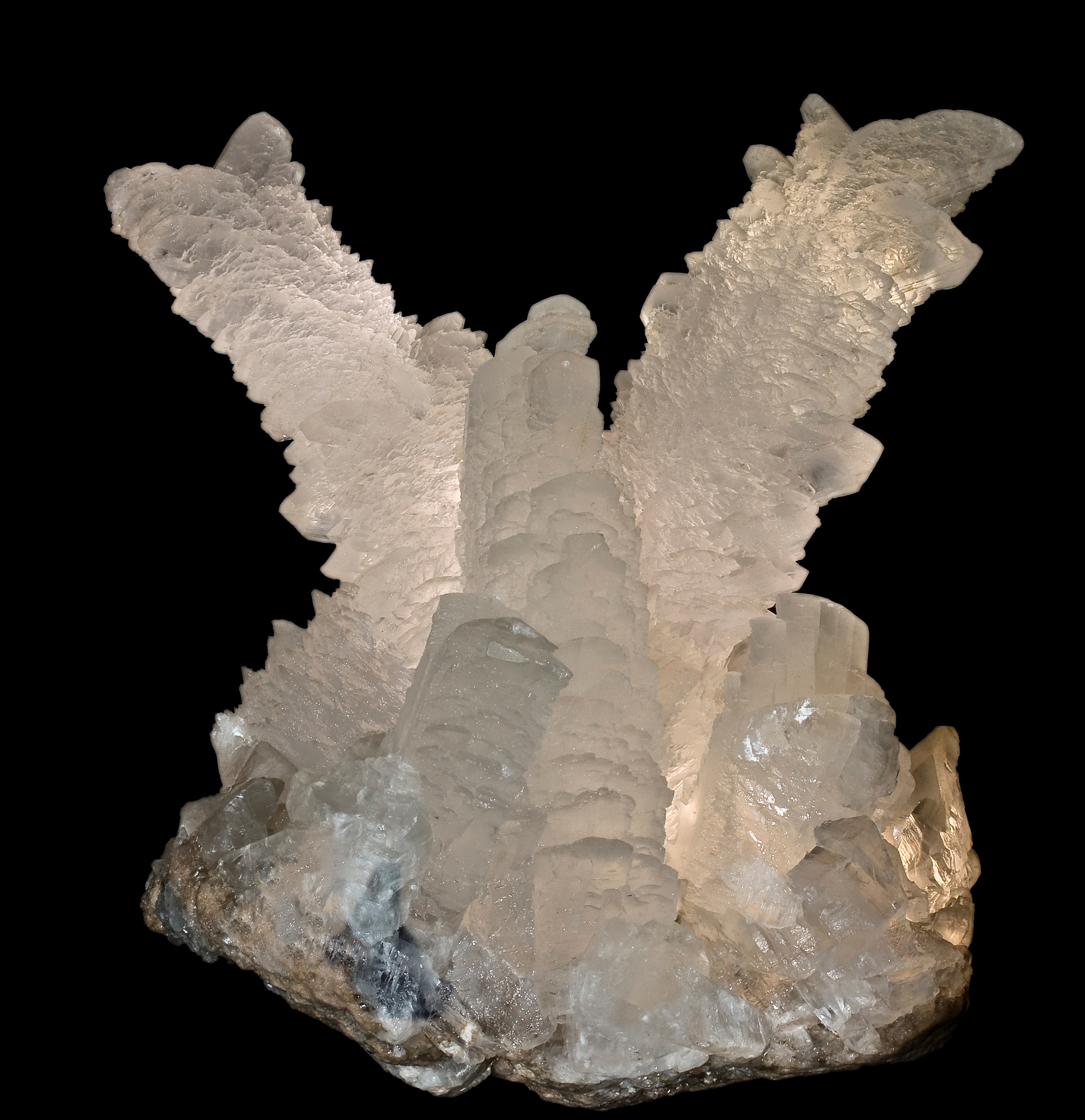
This specimen features large, translucent to milky white gypsum crystals, forming a radiating or columnar habit, with some individual crystals showing distinct faces and a overall impressive size.
Geological Context
Gypsum is a common evaporite mineral formed from the precipitation of calcium sulfate from saline waters. The colossal crystals from Naica formed in hydrothermal caves, where hot, mineral-rich waters saturated with calcium sulfate slowly cooled over millennia.