Granite
Image: Kemal KOZBAEV (CC BY-SA 4.0)
Mineral NameGranite
Chemical FormulaPrimarily composed of Quartz (SiO2), Feldspar (KAlSi3O8, NaAlSi3O8, CaAl2Si2O8), and Mica (K(Mg,Fe)3AlSi3O10(OH)2, KAl2(AlSi3O10)(OH)2)
Mohs Hardness6
Streak ColorNo streak (too hard)
CleavageNot applicable for a rock; constituent minerals have varying cleavage
FractureUneven to conchoidal
Specific Gravity2.65
Colorsgrey, white, black
TransparencyOpaque
Type LocalityWorldwide
Mineral GroupIgneous rock (Felsic intrusive)
Usesconstruction, monuments, countertops, decorative stone
Associated Mineralsquartz, feldspar, biotite, muscovite, amphibole
Raritycommon
Description
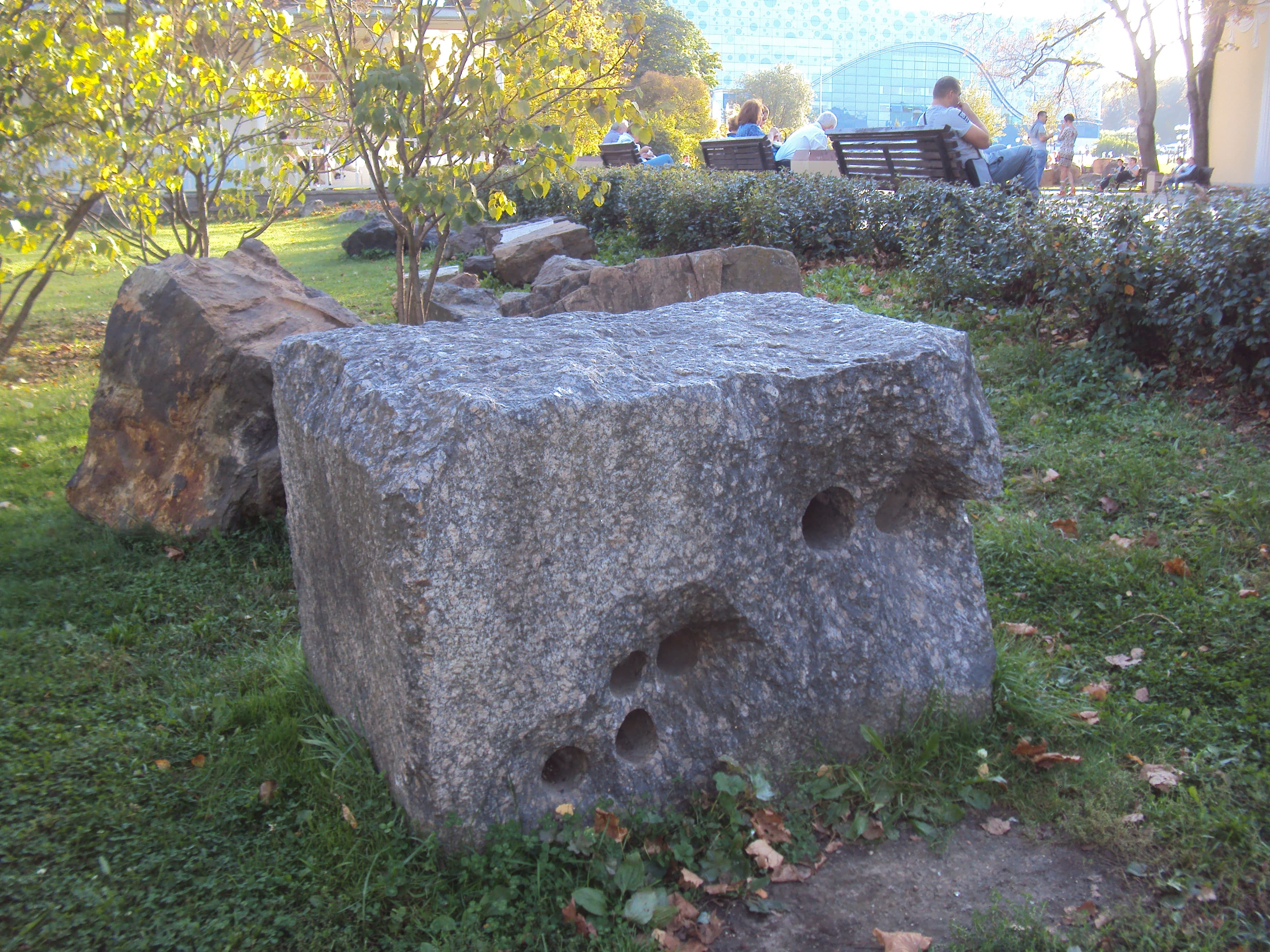
A large, grey, coarse-grained igneous rock block with visible interlocking mineral grains, displaying several drilled holes on one side.
Geological Context
Granite forms from the slow cooling and crystallization of magma deep within the Earth's crust, typically associated with continental collision zones and mountain building.