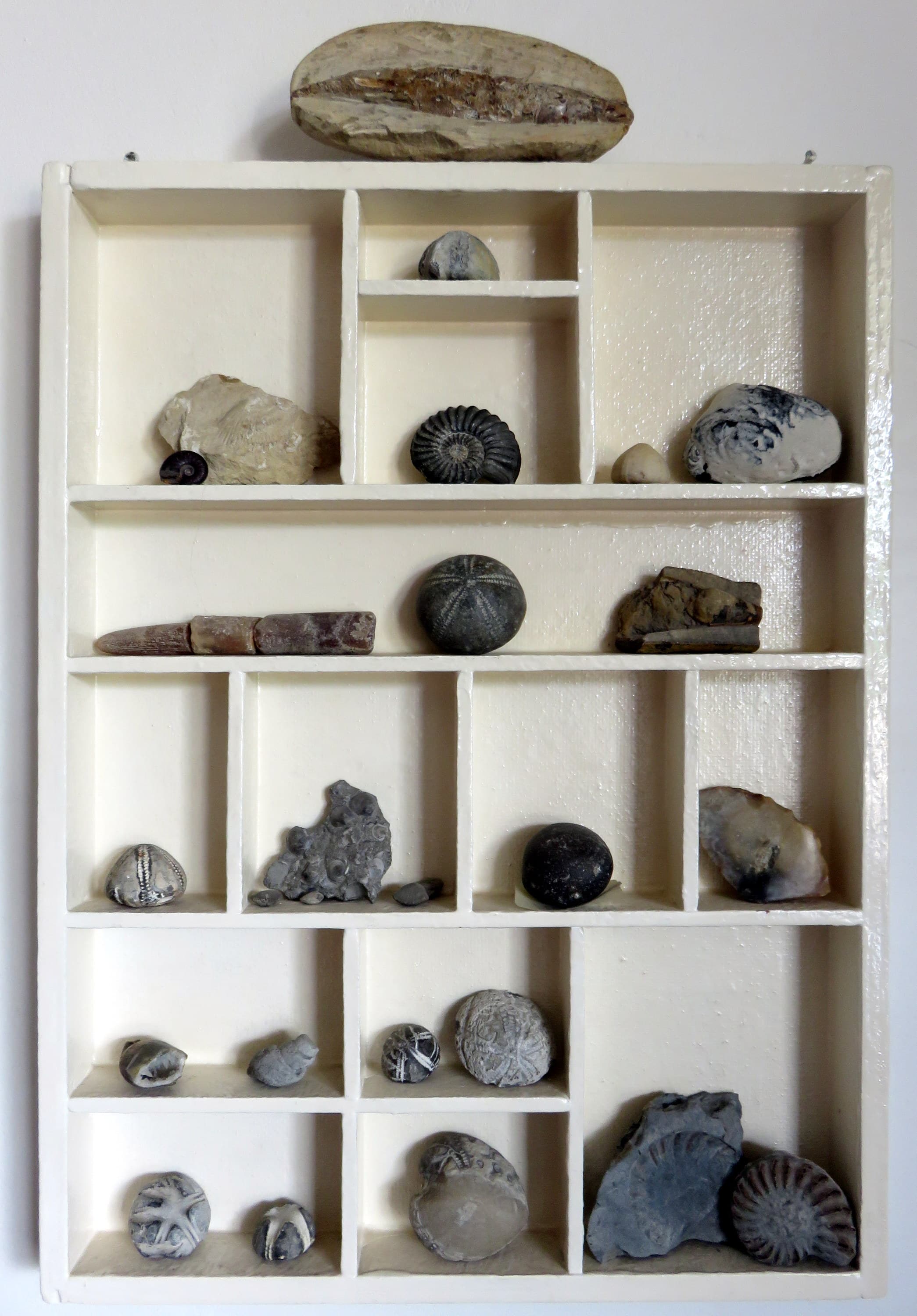
Fossil Collection (Ammonites, Echinoids, Belemnites, Bivalves)
Image: Vitavia (CC BY-SA 4.0)
Mineral NameFossil Collection (Ammonites, Echinoids, Belemnites, Bivalves)
Chemical FormulaVaries; commonly CaCO3 (calcite) or SiO2 (silica) replacing original organic material, embedded in sedimentary rock matrix.
Mohs HardnessVaries (typically 3-7, depending on the mineral replacement and matrix rock type, e.g., calcite 3, quartz 7).
Streak ColorVaries; often white, gray, or brown, depending on the matrix and fossil composition.
CleavageNot applicable to the fossilized organisms; the surrounding rock matrix may exhibit cleavage (e.g., calcite in limestone).
FractureVaries; often uneven or earthy for the matrix, conchoidal if silicified.
Specific GravityVaries (typically 2.6-3.0, depending on the mineral replacement and matrix rock type).
Colorsgray, brown, beige, black, white
TransparencyOpaque to translucent
Type LocalityUnknown; fossils of these types are found in marine sedimentary deposits worldwide.
Mineral GroupNot a mineral; these are biological remains preserved through processes like permineralization or replacement within sedimentary rocks.
Usesdecorative item, educational specimen, scientific study, collector's item
Associated Mineralscalcite, quartz, clay minerals, pyrite, limestone, shale, sandstone
Description
A diverse collection of marine invertebrate fossils, including several ammonites, sea urchins (echinoids), belemnites, and bivalves, displayed in a multi-compartment case. The fossils exhibit various shades of gray, brown, and beige, showcasing their preserved forms and textures.
Geological Context
Fossils form when organisms are rapidly buried by sediment, preventing decomposition. Over geological time, the organic material is often replaced by minerals (permineralization or replacement) while preserving the original structure, typically within sedimentary rocks like limestone, shale, or sandstone, indicating ancient marine environments.