Eurypterid Fossil
Image: Alex Ranaldi from Syracuse, NY, USA (CC BY-SA 2.0)
Mineral NameEurypterid Fossil
Chemical FormulaVariable, typically calcium carbonate (CaCO3) or silica (SiO2) replacing original organic material.
Mohs Hardness3
Streak Colordark brown to black
Cleavagenone (for the fossil itself)
Fractureuneven to conchoidal
Specific Gravity2.7
Colorsdark brown, black, tan, grey
Transparencyopaque
Type LocalityQuarry near Fort Erie, Ontario, Canada
Mineral GroupFossil (Arthropod)
Usesscientific study, educational, collector's item
Associated Mineralscalcite, quartz, clay minerals
Rarityuncommon
Description
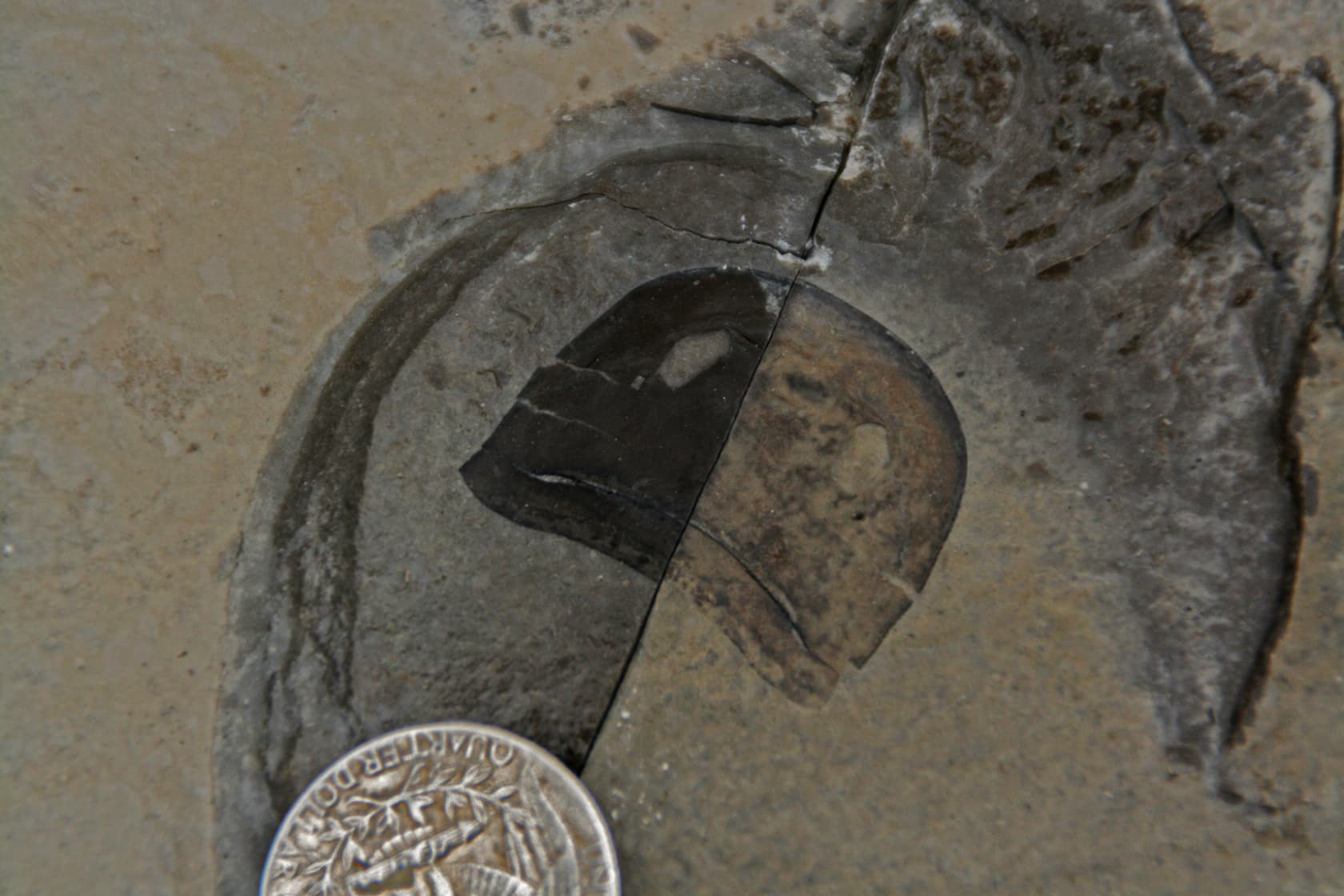
A dark brown to black, partially preserved head (carapace) of a eurypterid, showing distinct outlines and some surface texture, embedded in a lighter tan-grey sedimentary rock matrix. A quarter coin is visible for scale.
Geological Context
This eurypterid fossil, approximately 430 million years old, was found in a quarry near Fort Erie, Ontario, Canada, indicating preservation in Silurian or Devonian marine sedimentary rocks. Eurypterids were ancient marine arthropods, often found in brackish or freshwater environments.