Eurypterid Fossil
Image: Ghedoghedo (CC BY-SA 3.0)
Mineral NameEurypterid Fossil
Chemical FormulaVariable (composition of host sedimentary rock, typically silicates, carbonates, and iron oxides)
Crystal Systemamorphous
Lusterdull
Streak ColorN/A
CleavageN/A
Fractureuneven
Colorsreddish-brown, dark brown
Transparencyopaque
Type LocalityPittsburgh, Carboniferous period
Mineral GroupFossil (Ichnofossil)
Usesscientific study, museum display, educational
Associated Mineralsquartz, feldspar, clay minerals, iron oxides
Rarityuncommon
Description
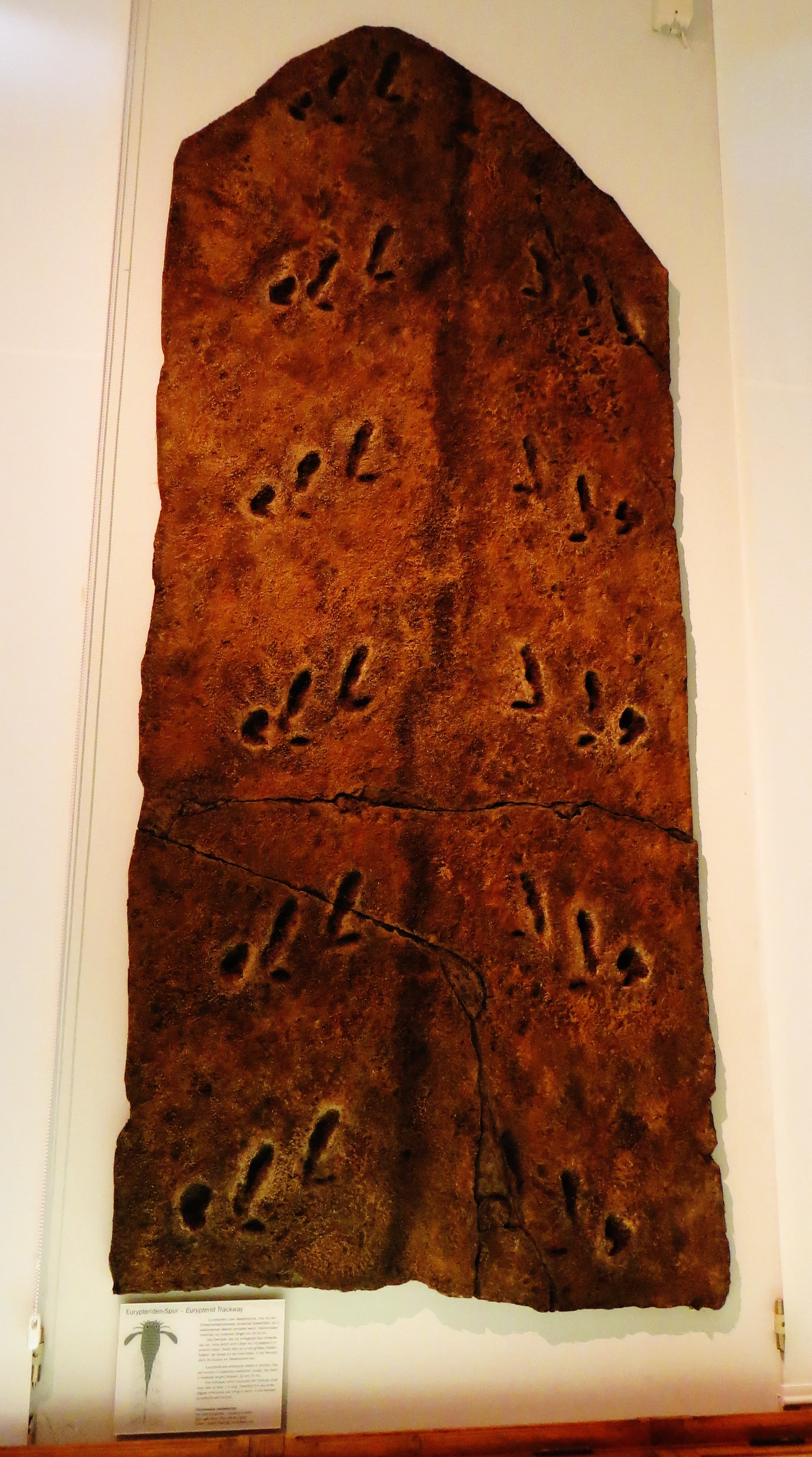
A large, rectangular slab of reddish-brown sedimentary rock displaying multiple rows of distinct, paired, crescent-shaped depressions, which are the fossilized trackways of a eurypterid.
Geological Context
These trackways represent the preserved locomotion of an ancient eurypterid (sea scorpion) from the Carboniferous period, likely formed in shallow marine or brackish water sediments that later lithified into sedimentary rock.