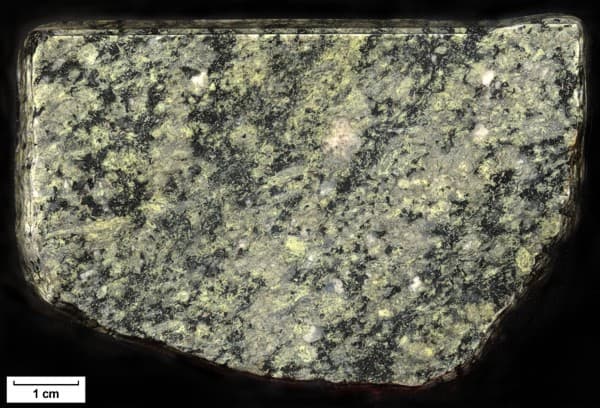
Diorite
Image: USGS (Public domain)
Mineral NameDiorite
Chemical FormulaMixture of minerals (primarily plagioclase feldspar, hornblende, pyroxene, biotite, and quartz)
Mohs Hardness6
Streak ColorVariable, typically white to light grey (from feldspar) or dark (from mafic minerals)
CleavageAbsent (as a rock, individual minerals may show cleavage)
FractureUneven to subconchoidal
Specific Gravity2.85
Colorsdark grey, black, greenish-grey, white
TransparencyOpaque
Type LocalityWorldwide, common in continental crust, often associated with subduction zones and mountain building
Mineral GroupIgneous Rock (Plutonic)
Usesconstruction material, dimension stone, decorative stone, road aggregate
Associated Mineralsplagioclase feldspar, hornblende, biotite, pyroxene, quartz, magnetite, apatite
Raritycommon
Description
This sample of quartz diorite displays a medium-grained, speckled texture with a dominant dark greenish-grey matrix interspersed with lighter grey and occasional white mineral grains. The overall appearance is granular and phaneritic.
Geological Context
Diorite is an intrusive igneous rock that forms from the slow crystallization of magma deep beneath the Earth's surface. It is typically found in batholiths and dikes in areas of continental crust, often associated with subduction zones where oceanic crust melts and rises.


