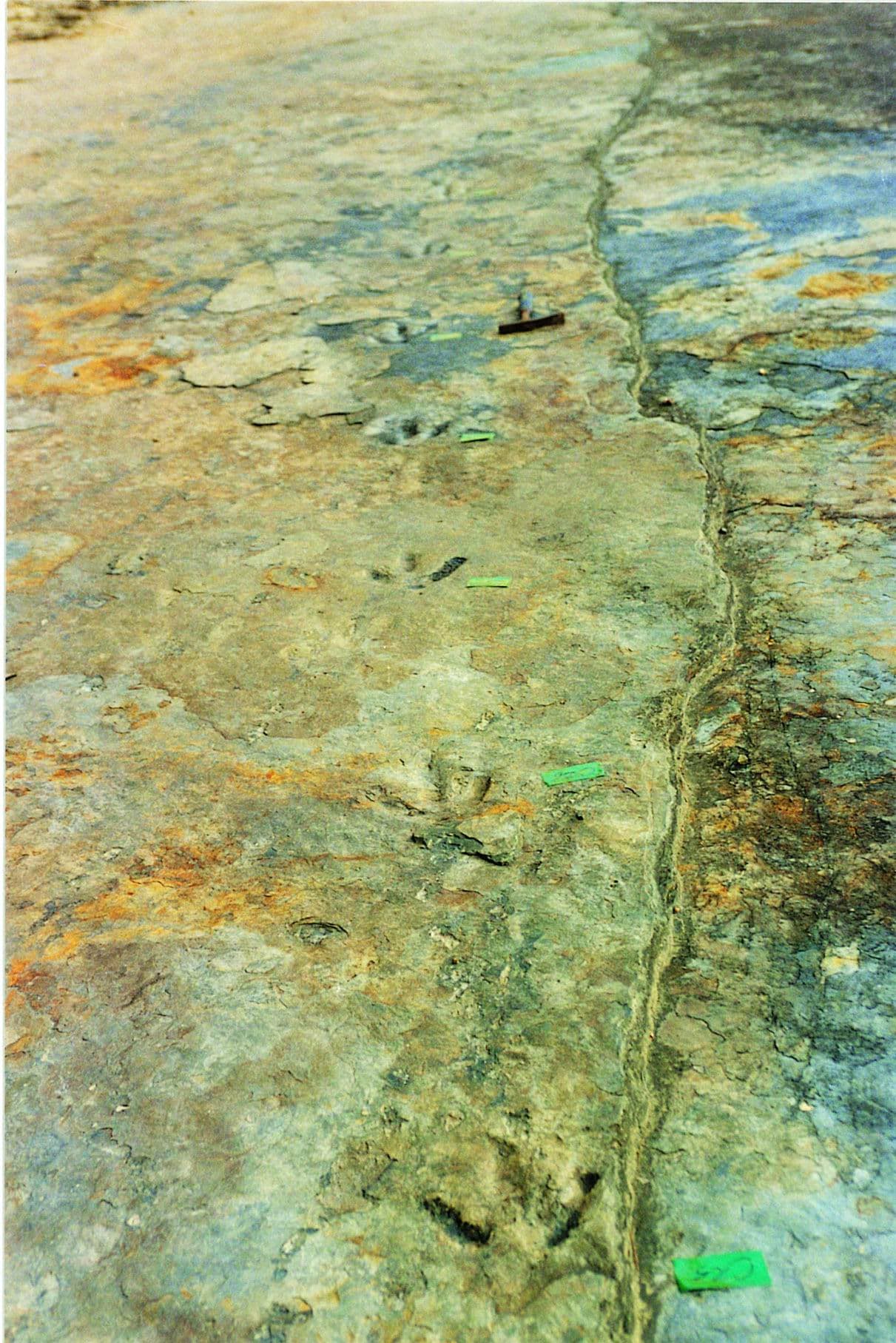
Dinosaur Footprint
Image: Korea Heritage Service (KOGL Type 1)
Mineral NameDinosaur Footprint
Chemical FormulaN/A (trace fossil)
Streak ColorN/A (depends on host rock)
CleavageN/A (depends on host rock)
FractureN/A (depends on host rock)
Colorsgreen, gray, brown, orange
Transparencyopaque
Type LocalityHwasun Seoyuri Dinosaur Footprint Fossil Site, South Korea
Mineral GroupN/A (ichnofossil)
Usesscientific study, educational display, paleontological tourism
Associated MineralsN/A (associated with sedimentary rocks like sandstone or mudstone)
Rarityrare
Description
The image shows a series of three-toed dinosaur footprints, likely from a theropod, preserved as depressions in a weathered, layered sedimentary rock surface. The rock exhibits a mottled coloration of greens, grays, browns, and oranges.
Geological Context
Dinosaur footprints are trace fossils formed when a dinosaur walks across soft sediment (like mud or sand) which then hardens and is subsequently buried and lithified into sedimentary rock. These trackways provide valuable insights into dinosaur locomotion, behavior, and paleoenvironments.


