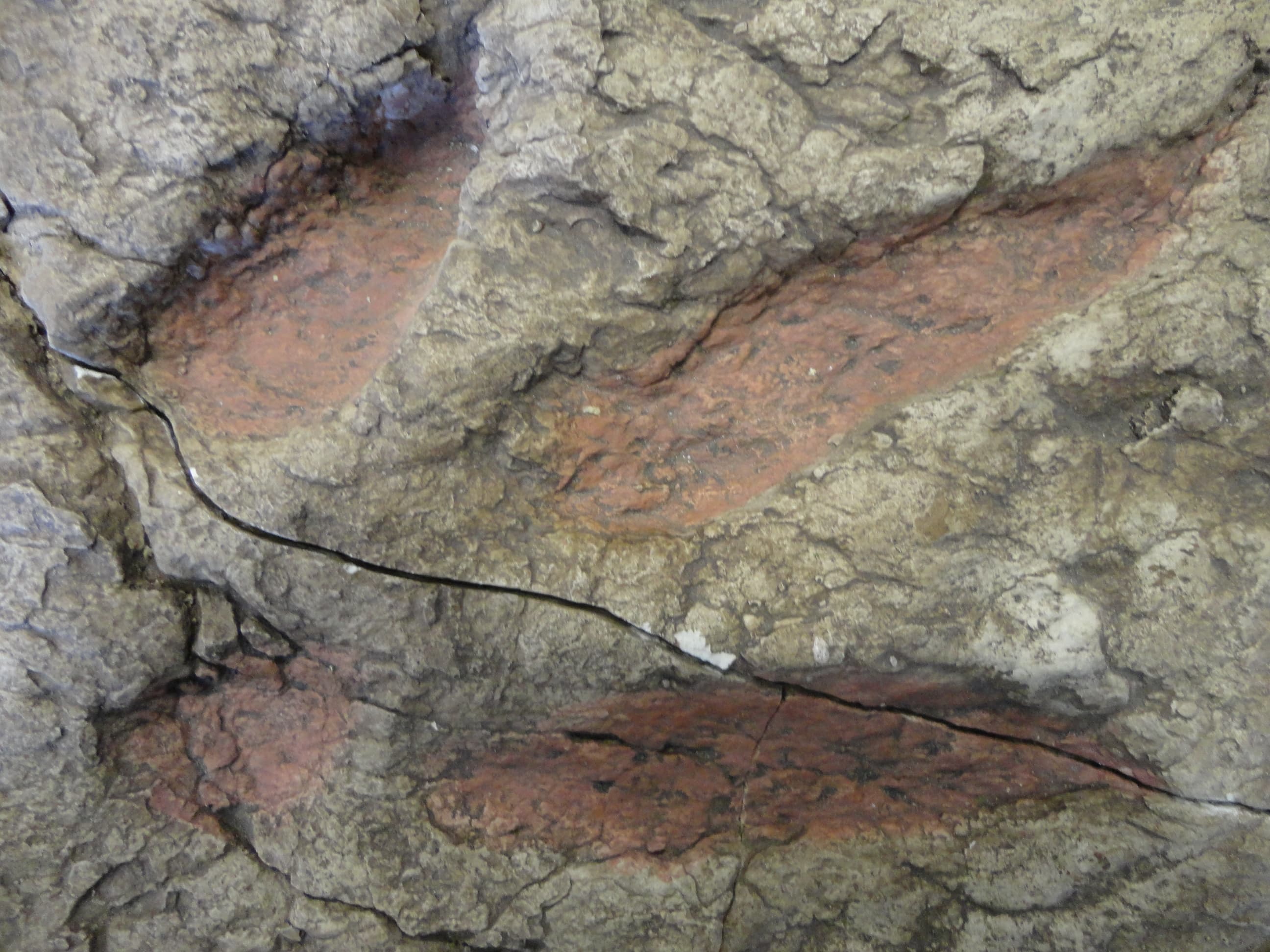
Dinosaur Footprint
Image: Juan Carlos Fonseca Mata (CC BY-SA 4.0)
Mineral NameDinosaur Footprint
Chemical FormulaN/A (trace fossil; host rock typically composed of silicates like SiO2, aluminosilicates, and iron oxides)
Streak ColorN/A (trace fossil; depends on host rock composition, often light brown to grey)
CleavageN/A (trace fossil; depends on host rock, often absent or poor in sedimentary rocks)
Fractureuneven (trace fossil; host rock typically conchoidal to uneven)
Colorsgrey, tan, reddish-brown, orange-brown
Transparencyopaque
Type LocalitySaltillo, Coahuila, Mexico
Mineral GroupTrace Fossil
Usespaleontological study, educational display, scientific research, museum exhibits
Associated Mineralsquartz, feldspar, clay minerals, iron oxides
Rarityrare
Description
This image displays a well-preserved, three-toed dinosaur footprint embedded in a textured, greyish-tan sedimentary rock matrix. The impression of the foot is filled with a distinct reddish-brown material, creating a clear contrast with the surrounding rock.
Geological Context
Dinosaur footprints are trace fossils formed when a dinosaur walked across soft sediment, such as mud or sand, which was then rapidly buried and lithified into sedimentary rock. These fossils provide invaluable insights into the locomotion, behavior, and paleoenvironment of ancient dinosaurs.


