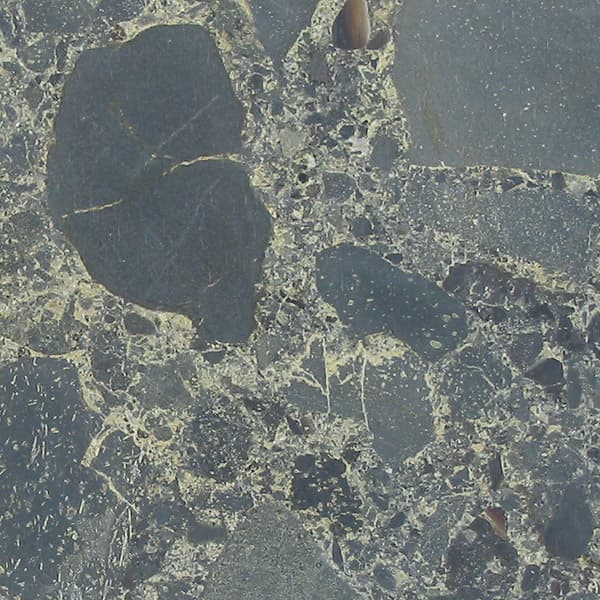
Breccia
Image: No machine-readable author provided. Siim assumed (based on copyright claims). (CC BY-SA 3.0)
Mineral NameBreccia
Chemical FormulaVariable, composed of fragments of other rocks and minerals (e.g., basalt, epidote)
Mohs Hardness6
Streak ColorVariable, often grayish-black to grayish-white
CleavageNot applicable (rock); components vary (e.g., epidote has perfect cleavage)
FractureVariable, often conchoidal to uneven
Specific Gravity2.8
Colorsblack, dark grey, greenish-grey
TransparencyOpaque to translucent
Type LocalityLa Palma, Canary Islands
Mineral GroupRock (Volcanic Breccia)
Usesconstruction aggregate, decorative stone, geological studies
Associated Mineralsbasalt, epidote, plagioclase, pyroxene, olivine
Raritycommon
Description
This rock sample is a breccia, characterized by angular fragments of dark grey to black basalt clasts cemented within a finer-grained, greenish-grey epidote groundmass.
Geological Context
Volcanic breccias form in volcanic environments from the fragmentation of lava flows or explosive eruptions, where angular rock fragments are subsequently cemented together, often with hydrothermal alteration leading to minerals like epidote.


