Anhydrite
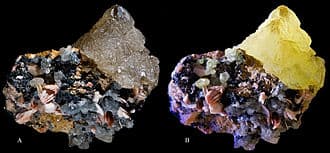
Image: Robert M. Lavinsky (CC BY-SA 3.0)
Mineral NameAnhydrite
Chemical FormulaCaSO4
Mohs Hardness3.5
Crystal Systemorthorhombic
Lustervitreous
Streak Colorwhite
CleavagePerfect in three directions (pinacoidal), forming nearly cubic fragments
Fractureuneven
Specific Gravity2.95
Colorswhite, gray, pale blue, violet, pink, brown
Transparencytransparent
Type LocalitySt Gotthard basis tunnel (north section), NEAT Construction site, Amsteg, Reuss Valley, Uri, Switzerland
Mineral GroupSulfates
Usesindustrial (source of sulfur, plaster, cement), soil conditioner, ornamental stone (as 'angelite')
Associated Mineralsgypsum, halite, calcite, dolomite, sulfur, celestine
Raritycommon
Description
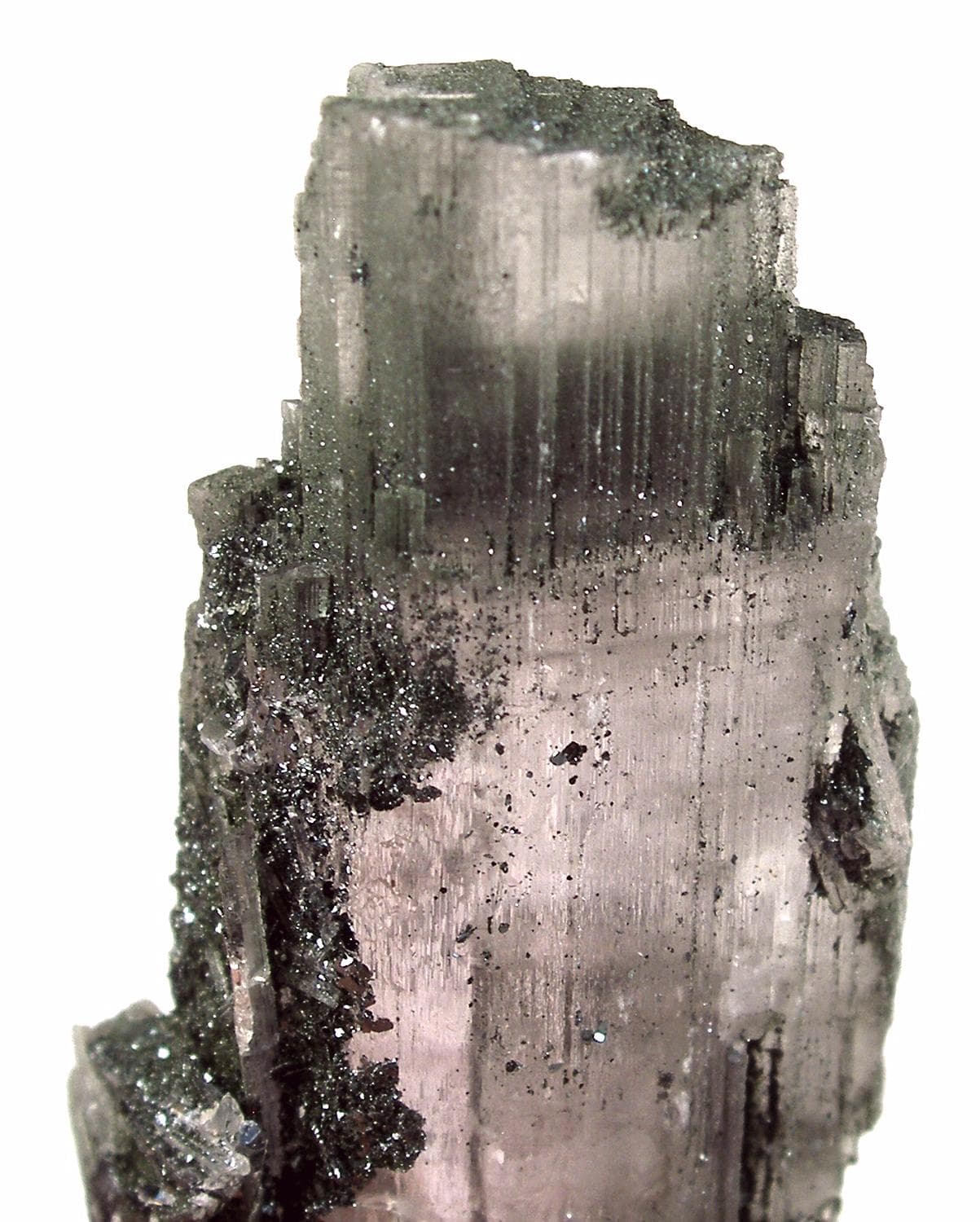
This specimen features blocky to prismatic crystals of pale blue to violet anhydrite, exhibiting a vitreous luster. The crystals show distinct cleavage planes.
Geological Context
Anhydrite commonly forms in evaporite deposits from the dehydration of gypsum in arid environments, or directly from the evaporation of seawater or saline lake water. It can also be found in hydrothermal veins.